
Expert Reviewed
Updated Regularly
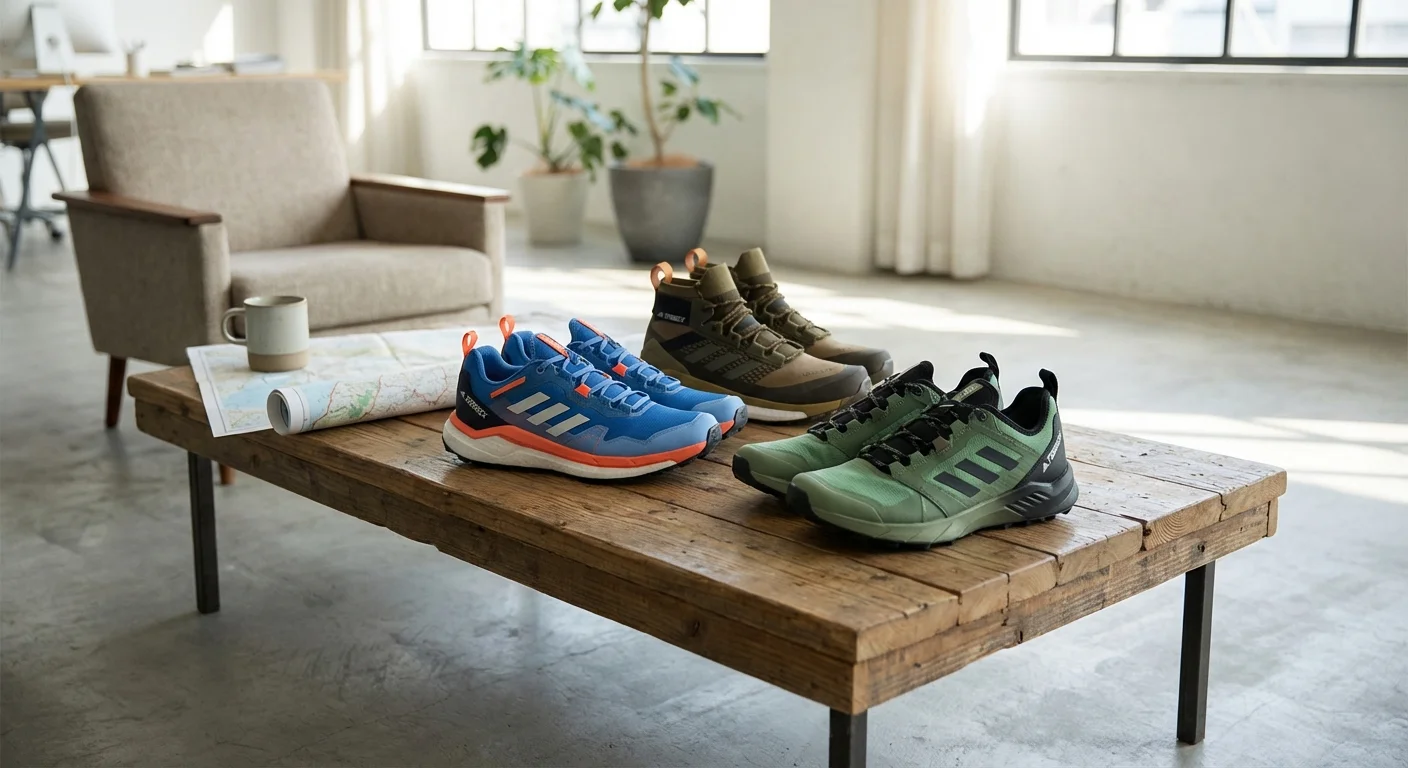
Choosing the right adidas trail running shoes can feel overwhelming. The brand’s Terrex lineup has grown fast in recent years. Each model targets a different type of runner and terrain. In this guide, we compare three top picks from Adidas for 2026. We’ll look at the Terrex Agravic Ultra, Terrex Speed Ultra, and Terrex Free Hiker 2.0. Whether you run ultras, race short trails, or hike rugged paths, one of these fits your needs. We’ll break down specs, comfort, grip, price, and real-world feel. By the end, you’ll know exactly which pair to buy.
Table of Contents
- Key Takeaways
- Quick Comparison of Top Adidas Trail Running Shoes
- Individual Product Breakdowns
- Head-to-Head Comparison of Adidas Trail Running Shoes
- Price and Value Analysis
- What Runners Are Saying
- Our Recommendation: Which Adidas Trail Running Shoes Should You Buy?
- Frequently Asked Questions About Adidas Trail Running Shoes
Key Takeaways
- The Terrex Agravic Ultra ($170) wins as the best overall adidas trail running shoe for long-distance comfort and grip.
- The Terrex Speed Ultra ($160) is 1.5 oz lighter per shoe, making it ideal for fast trail races.
- The Terrex Free Hiker 2.0 ($200) offers the most ankle support and works best on rocky, technical terrain.
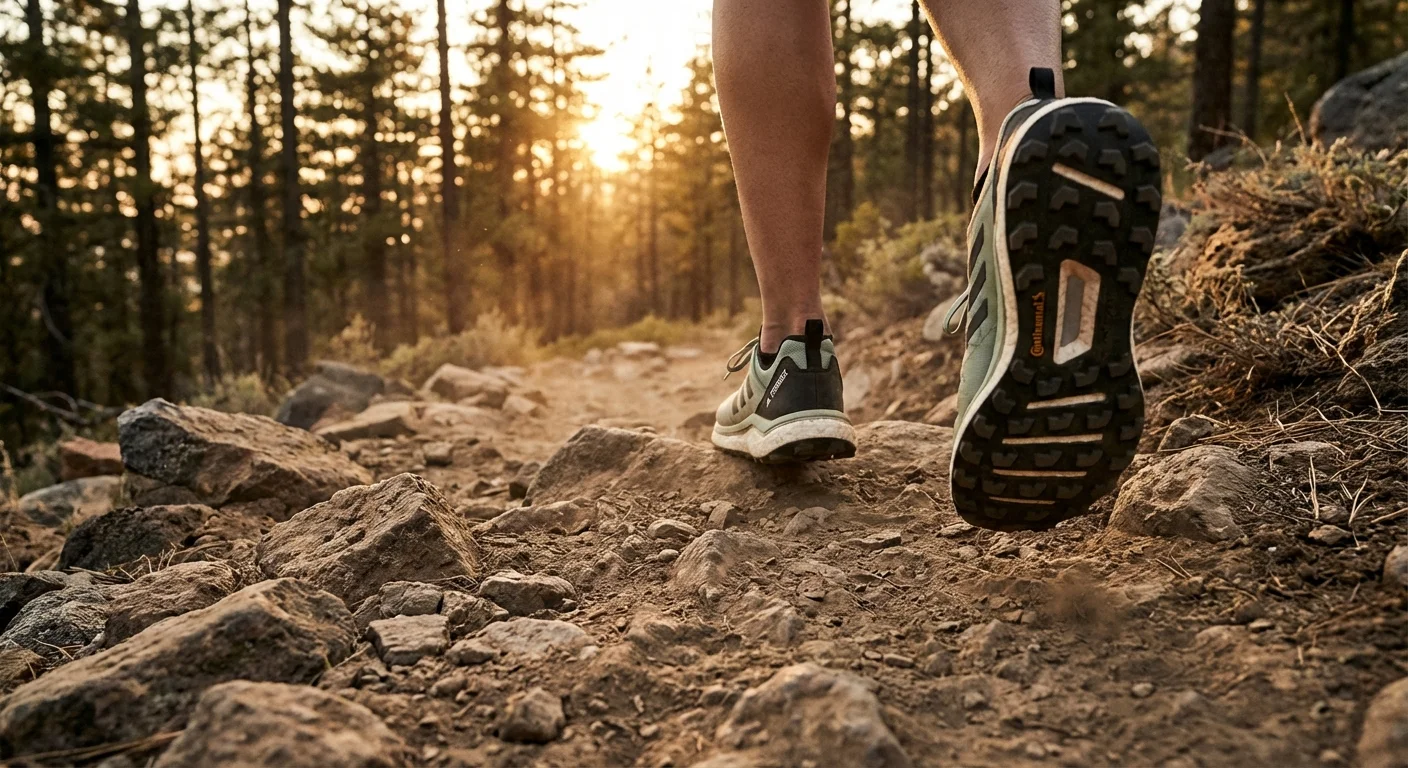
- All three models use Continental rubber outsoles, but tread depth varies from 3.5 mm to 5 mm.
- Budget-minded runners should watch for the Terrex Speed Ultra, which often drops to $120 on sale.
Quick Comparison of Top Adidas Trail Running Shoes
| Feature | Terrex Agravic Ultra | Terrex Speed Ultra | Terrex Free Hiker 2.0 |
|---|---|---|---|
| Price (MSRP) | $170 | $160 | $200 |
| Weight (Men’s Size 9) | 10.6 oz | 9.1 oz | 13.2 oz |
| Drop | 6 mm | 8 mm | 8 mm |
| Midsole | Lightstrike Pro | Lightstrike Pro | Boost |
| Outsole Lug Depth | 4 mm | 3.5 mm | 5 mm |
| Outsole Rubber | Continental | Continental | Continental |
| Waterproof Option | No | No | Yes (GTX version) |
| Best For | Ultra distances | Speed/racing | Technical hikes |
| Our Rating | 4.7/5 | 4.4/5 | 4.3/5 |
Individual Product Breakdowns
Adidas Terrex Agravic Ultra
The Terrex Agravic Ultra is Adidas’s flagship ultra-distance trail shoe. It’s built for runners who log 50K+ races on mixed terrain. The Lightstrike Pro midsole gives you bouncy energy return. It’s the same foam found in the Adizero Adios Pro road racing shoe.
At 10.6 oz, it strikes a nice balance. It’s light enough for speed but cushioned enough for long days. The 6 mm drop feels natural on climbs and descents. You won’t feel beat up after 30+ miles.
Grip is outstanding. The Continental rubber outsole uses 4 mm lugs. These bite hard on mud, wet rock, and loose gravel. Adidas partnered with Continental tire company for this rubber. It’s the same tech that keeps cars on wet roads.
The upper uses a breathable mesh with reinforced toe cap. It drains water fast after creek crossings. The lacing system is standard but holds the midfoot snug. Heel lockdown is solid, with minimal slip on steep descents.
One downside: the shoe runs a bit narrow. Wide-footed runners may need to size up by half. The tongue can also bunch up under the laces on long runs. A gusseted tongue would’ve been a welcome upgrade.
$170
- Excellent energy return from Lightstrike Pro foam
- Continental outsole grips wet and dry terrain
- Light enough for racing, cushioned enough for ultras
- Quick-draining upper handles water crossings well
- Runs narrow — not great for wide feet
- Tongue can bunch on longer efforts
- No waterproof version offered
Adidas Terrex Speed Ultra
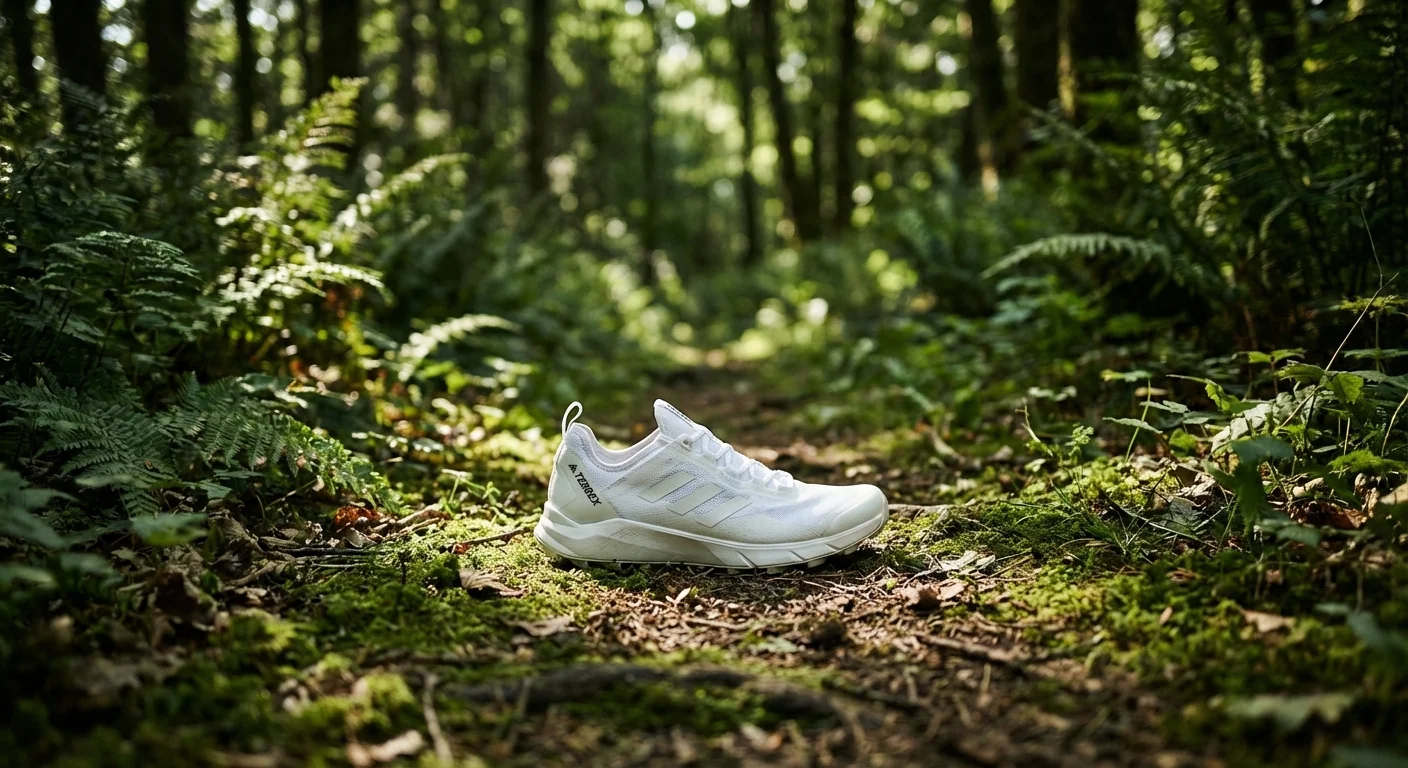
The Terrex Speed Ultra is built for one thing: fast trail racing. At just 9.1 oz, it’s 1.5 oz lighter than the Agravic Ultra. You feel that difference on climbs. This shoe wants to move.
It also uses Lightstrike Pro foam. The stack height is lower, though. That means less cushion but a more responsive, ground-connected feel. The 8 mm drop tips you slightly forward. This helps on flat and rolling trails.
The outsole is Continental rubber, just like its sibling. Lug depth is 3.5 mm. That’s half a millimeter less than the Agravic. On dry and packed dirt, it grips great. On deep mud, it struggles a bit. This shoe is best for buffed-out or groomed trails.
The upper is thin and airy. It’s great for hot weather running. But it offers less protection than the Agravic Ultra. Sharp rocks and roots can poke through more easily. If you run rocky alpine terrain, you’ll want the Agravic instead.
At $160 retail, it’s $10 cheaper than the Agravic. But the Speed Ultra often goes on sale. We’ve seen it drop to $120 at major retailers. That makes it the value pick in this lineup. You get race-day foam at a mid-range price.
$160
- Very light at 9.1 oz for speedy trail races
- Lightstrike Pro gives snappy energy return
- Often found on sale around $120
- Breathable upper stays cool in heat
- Thin upper offers less rock protection
- Shallower lugs lose grip in deep mud
- Lower cushion won’t suit ultra distances
Adidas Terrex Free Hiker 2.0
The Terrex Free Hiker 2.0 blurs the line. It’s part trail shoe, part hiking boot. At 13.2 oz, it’s the heaviest shoe here. But it offers the most support and protection.
The midsole uses Boost foam instead of Lightstrike Pro. Boost is softer and more plush. It absorbs impact well on rocky, technical terrain. The 8 mm drop and high stack provide a cushy ride all day long.
The outsole has 5 mm lugs. That’s the deepest in this comparison. It bites hard on mud, scree, and wet rock. The Continental rubber compound adds wet-weather confidence. You won’t slip on rain-soaked granite.
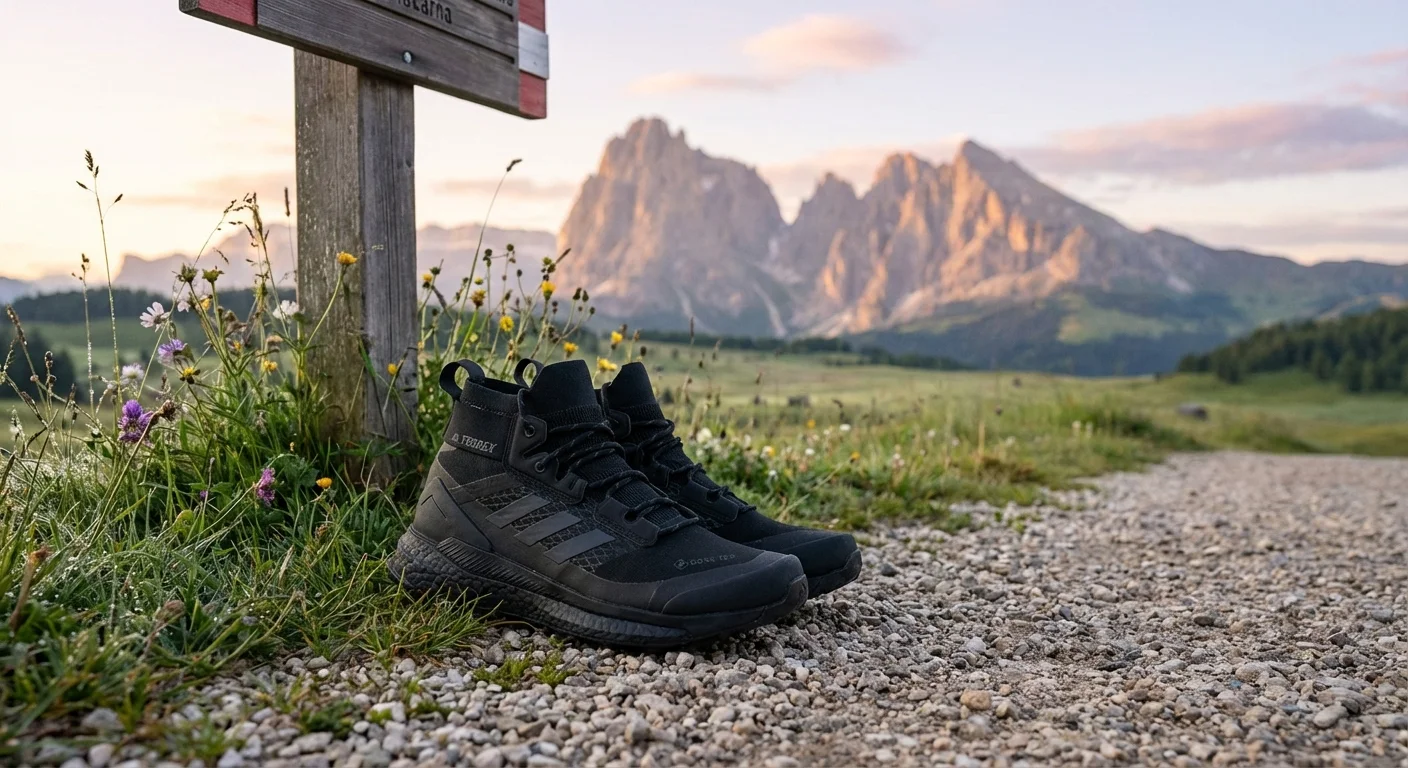
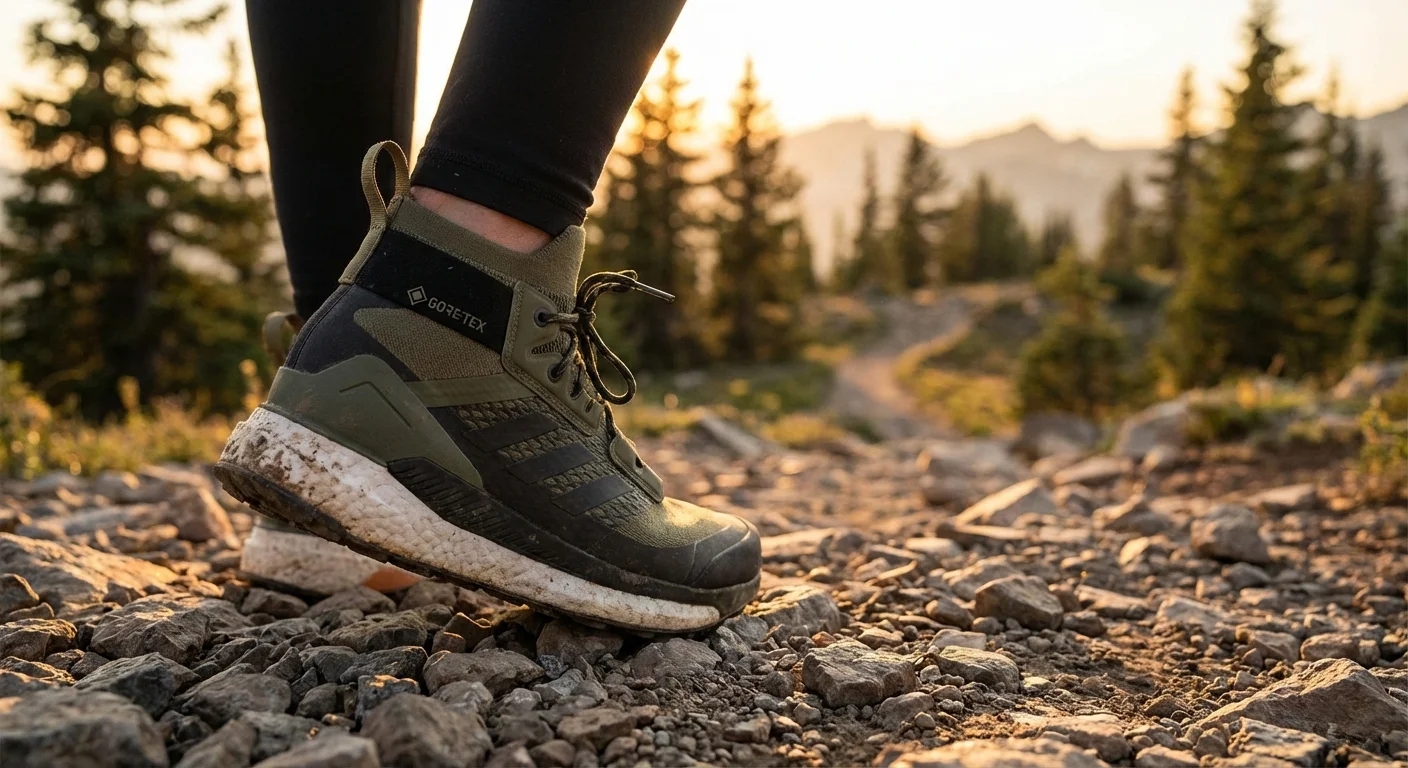
What sets this shoe apart is the mid-cut collar. It wraps around your ankle for extra stability. This helps prevent rolled ankles on uneven ground. A GORE-TEX version (GTX) is also available for $230. That’s great for rainy or snowy conditions.
The trade-off is weight and speed. You won’t race in this shoe. It’s too heavy. It’s also stiffer than the other two models. Think of it as a speed hiker, not a trail racer. If you want a fast-light boot that still feels like a shoe, the Free Hiker 2.0 delivers.
$200
- 5 mm lugs offer the best grip on technical terrain
- Mid-cut collar adds ankle support
- Boost foam is plush for all-day comfort
- GORE-TEX version available for wet weather
- Heavy at 13.2 oz — not built for speed
- Stiffer feel than the other two models
- Premium price at $200 ($230 for GTX)
Head-to-Head Comparison of Adidas Trail Running Shoes
Cushion and Ride Feel
The Agravic Ultra and Speed Ultra share the same Lightstrike Pro foam. But the Agravic has a thicker stack. That gives it about 15% more cushion underfoot. The Free Hiker uses Boost, which feels softer. It absorbs more shock but returns less energy. For racing, Lightstrike Pro wins. For all-day hikes, Boost is more forgiving.
Traction and Grip
All three shoes use Continental rubber. The difference is lug depth. The Free Hiker’s 5 mm lugs outgrip the others by a clear margin. The Agravic’s 4 mm lugs handle most mud and rock well. The Speed Ultra’s 3.5 mm lugs work fine on dry, packed trails. They fall short in deep mud, though. If you run in wet conditions often, the Agravic or Free Hiker is the safer bet.
Weight and Speed
The Speed Ultra is 14% lighter than the Agravic Ultra. It’s 31% lighter than the Free Hiker 2.0. Over a 50K race, that weight difference adds up fast. Lighter shoes reduce fatigue on your legs. If your goal is a podium finish, pick the Speed Ultra. If you need comfort over 50+ miles, the Agravic’s extra cushion is worth the 1.5 oz penalty.
Durability
The Free Hiker 2.0 is the most durable. Its thicker upper and deeper lugs last longer on abrasive rock. We’d expect about 400-500 miles from it. The Agravic Ultra holds up for about 350-400 miles. The Speed Ultra, with its thinner upper, wears faster. Plan on 250-350 miles before the outsole starts losing grip.
Fit and Comfort
The Agravic Ultra fits snug and narrow. Wide-footed runners should size up. The Speed Ultra has a similar fit but is slightly roomier in the toe box. The Free Hiker 2.0 fits true to size. Its mid-cut collar feels secure, not tight. Most runners find it comfortable right out of the box.
Price and Value Analysis
At $160, the Terrex Speed Ultra offers the best raw value. It uses the same premium Lightstrike Pro foam as the Agravic. You just get less of it. When it drops to $120 on sale, it’s a steal. That’s race-level foam at a budget-shoe price. See how this model stacks up in our best running shoes for men analysis.
The Agravic Ultra at $170 is the sweet spot. You get top-tier cushion, great grip, and solid durability. It costs only $10 more than the Speed Ultra but offers much more range. It handles everything from 10K trails to 100-milers. Our adidas terrex review covers the specs and real-world performance in detail.
The Free Hiker 2.0 at $200 is the premium option. The GTX version pushes to $230. That’s steep. But you’re getting ankle support, Boost cushion, and a waterproof option. It’s worth the money if you need a versatile hiking and light trail shoe. For pure running, though, the other two are better values. We tested several alternatives in our hoka trail shoes women roundup.
What Runners Are Saying
“I ran a 50-miler in the Agravic Ultra and my feet felt great at mile 48. The cushion held up the entire race. Grip on muddy singletrack was awesome. Best adidas trail running shoes I’ve owned.”
“The Speed Ultra is so light it feels like a racing flat on trails. I set a 25K PR in these. They struggle in thick mud, but on dry trails they’re unbeatable. Great shoe for the price.”
“I use the Free Hiker 2.0 GTX for winter trail runs. The waterproofing works. The ankle support saved me on icy rocks. It’s heavy, but I don’t care. Warmth and grip matter more in winter.”
Our Recommendation: Which Adidas Trail Running Shoes Should You Buy?
For most trail runners, the Terrex Agravic Ultra is the best choice. It balances cushion, grip, weight, and price better than anything else in the 2026 Terrex lineup. It handles races from 10K to 100 miles with ease. It’s our top pick.
If you race short to mid-distance trails and want speed, grab the Terrex Speed Ultra. It’s light, fast, and affordable. Wait for a sale and you can get it for around $120. It’s a race-day weapon.
If you hike rugged terrain or need all-weather protection, the Terrex Free Hiker 2.0 is your shoe. The GTX version handles rain, snow, and mud. The mid-cut collar keeps your ankles safe. It’s not a racer, but it’s the toughest shoe here.
No matter your choice, these adidas trail running shoes deliver quality. Pick the one that matches your terrain and goals.
Frequently Asked Questions About Adidas Trail Running Shoes
Are adidas trail running shoes good for beginners?
Yes. The Terrex Agravic Ultra is a great starting point. It offers cushion, grip, and stability for new trail runners. The forgiving ride helps on technical terrain. Start with this model and adjust as you learn your preferences.
How do Adidas Terrex shoes fit compared to Nike trail shoes?
Adidas Terrex shoes tend to run slightly narrow. Nike trail shoes like the Pegasus Trail are a bit wider. If you have wide feet, try the Terrex Free Hiker 2.0. It has the roomiest fit in the lineup. You can also go up half a size in the Agravic Ultra.
Can you use Adidas trail shoes on road surfaces?
You can for short stretches. The Continental rubber handles pavement fine. But the lugs will wear down faster on hard surfaces. If your run mixes trail and road, the Speed Ultra works best. Its shallower lugs feel smoother on pavement.
How long do Adidas Terrex trail shoes last?
It depends on the model and terrain. The Free Hiker 2.0 lasts about 400-500 miles. The Agravic Ultra gets 350-400 miles. The Speed Ultra wears faster at 250-350 miles. Rocky terrain shortens lifespan. Softer dirt extends it.
Do Adidas make waterproof trail running shoes?
Yes. The Terrex Free Hiker 2.0 comes in a GORE-TEX (GTX) version. It costs $230. The waterproof membrane keeps your feet dry in rain and snow. The Agravic and Speed Ultra don’t offer waterproof versions in 2026.
What makes Continental rubber outsoles special?
Continental is a German tire company. Adidas uses their rubber on Terrex outsoles. This rubber grips better on wet surfaces than standard shoe rubber. It’s the same compound used on high-performance car tires. It lasts longer too.
