
Expert Reviewed
Updated Regularly
Finding the right Merrell trail running shoes can transform your off-road running experience. But picking the perfect pair is only half the battle. You also need to break them in the right way. This guide walks you through every step. You’ll learn how to choose the best model for your terrain. You’ll discover how to size them correctly. And you’ll master the break-in process so your feet stay happy on every trail. Whether you’re a beginner hitting dirt paths or a seasoned runner tackling rocky mountains, this guide has you covered for 2026.
Table of Contents
Key Takeaways
- Order Merrell trail running shoes a half-size up from your street shoe size to allow for foot swelling on trails.
- The break-in period takes 3-5 short runs of 2-3 miles each before tackling longer distances.
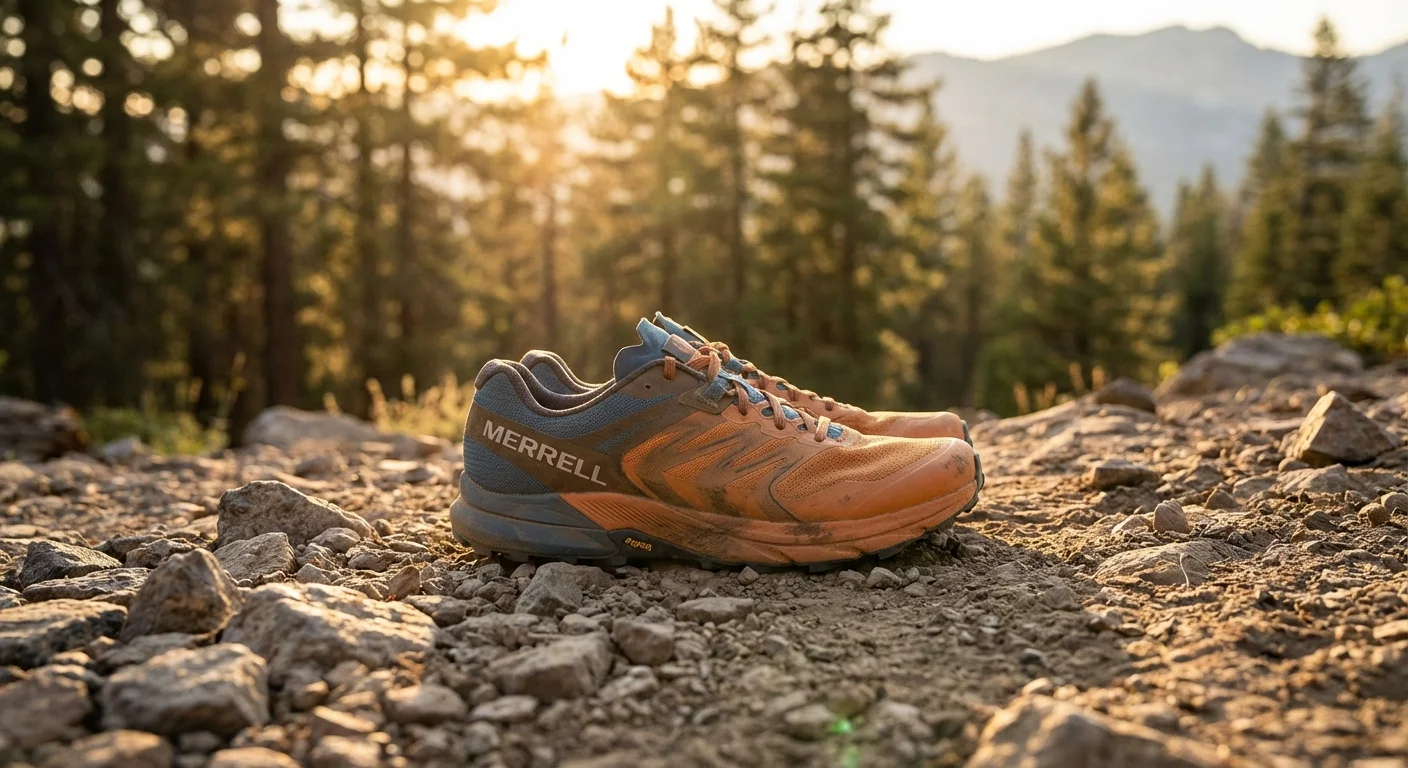
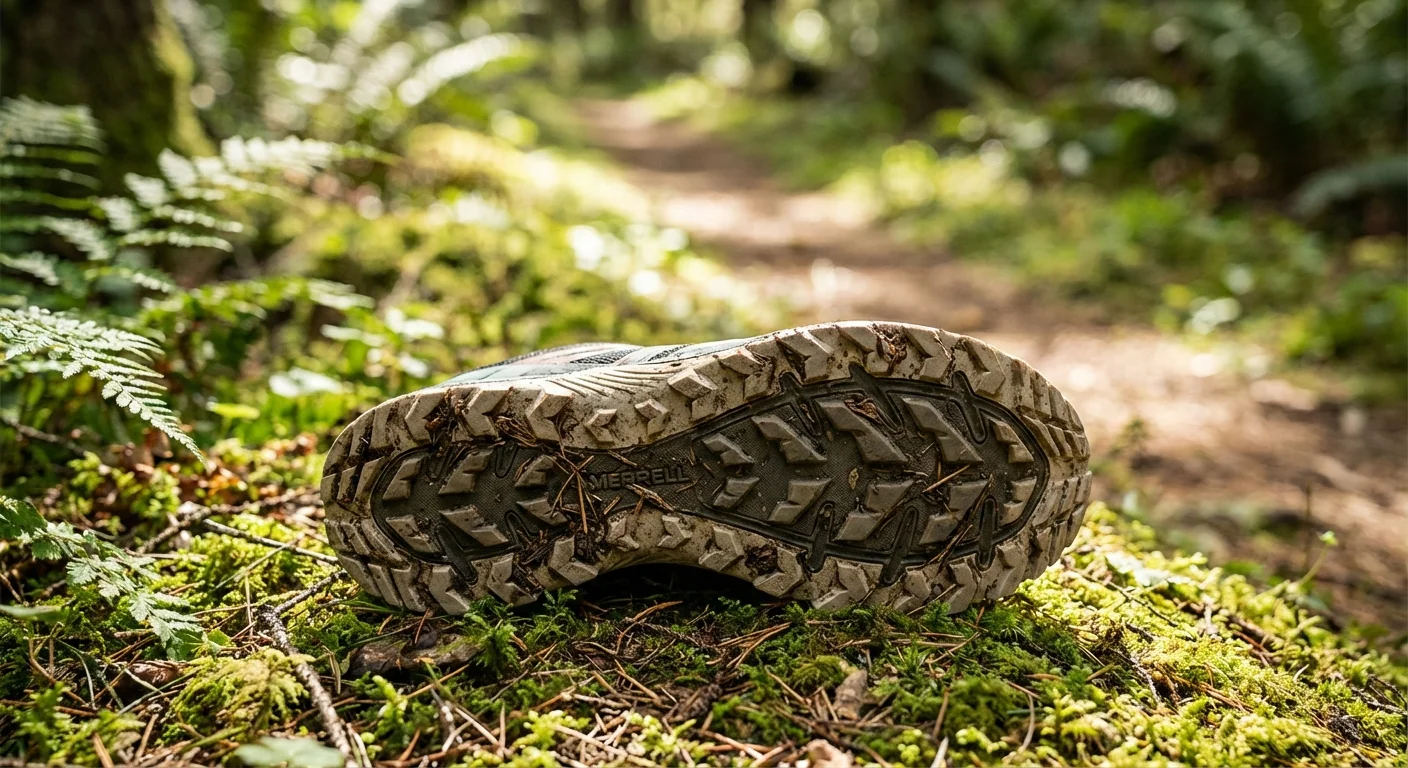
- Match your lug depth to your terrain — 3-4mm lugs for packed trails, 5mm+ lugs for mud and loose rock.
- Merrell’s Vibram outsoles last roughly 300-500 miles before needing replacement.
- Rotate between two pairs to extend each shoe’s lifespan by up to 40%.
Quick Answer
Start by picking a Merrell trail shoe that matches your terrain and foot shape. Go a half-size up from your normal size. Then break them in with 3-5 short runs before any big adventures. This simple process prevents blisters and boosts comfort on every trail.
What You’ll Need
- A pair of Merrell trail running shoes (we’ll help you pick the right model)
- Moisture-wicking trail running socks (like Darn Tough or Smartwool)
- A foot measuring tool or Brannock device
- Access to a local trail or dirt path for break-in runs
- Athletic tape or moleskin for blister-prone areas
- A shoe journal or running app to track mileage
Step-by-Step Guide to Choosing Merrell Trail Running Shoes
Step 1: Identify Your Trail Type
Your terrain dictates your shoe choice. Think about where you’ll run most often. Packed dirt trails need less aggressive tread. Rocky, technical terrain needs stiffer soles and toe protection. Muddy paths demand deep lugs that shed dirt quickly.
Here’s a quick breakdown:
- Groomed paths: Merrell Agility Peak 5 (light, flexible, 3.5mm lugs)
- Rocky terrain: Merrell MQM 3 (rock plate, firm midsole)
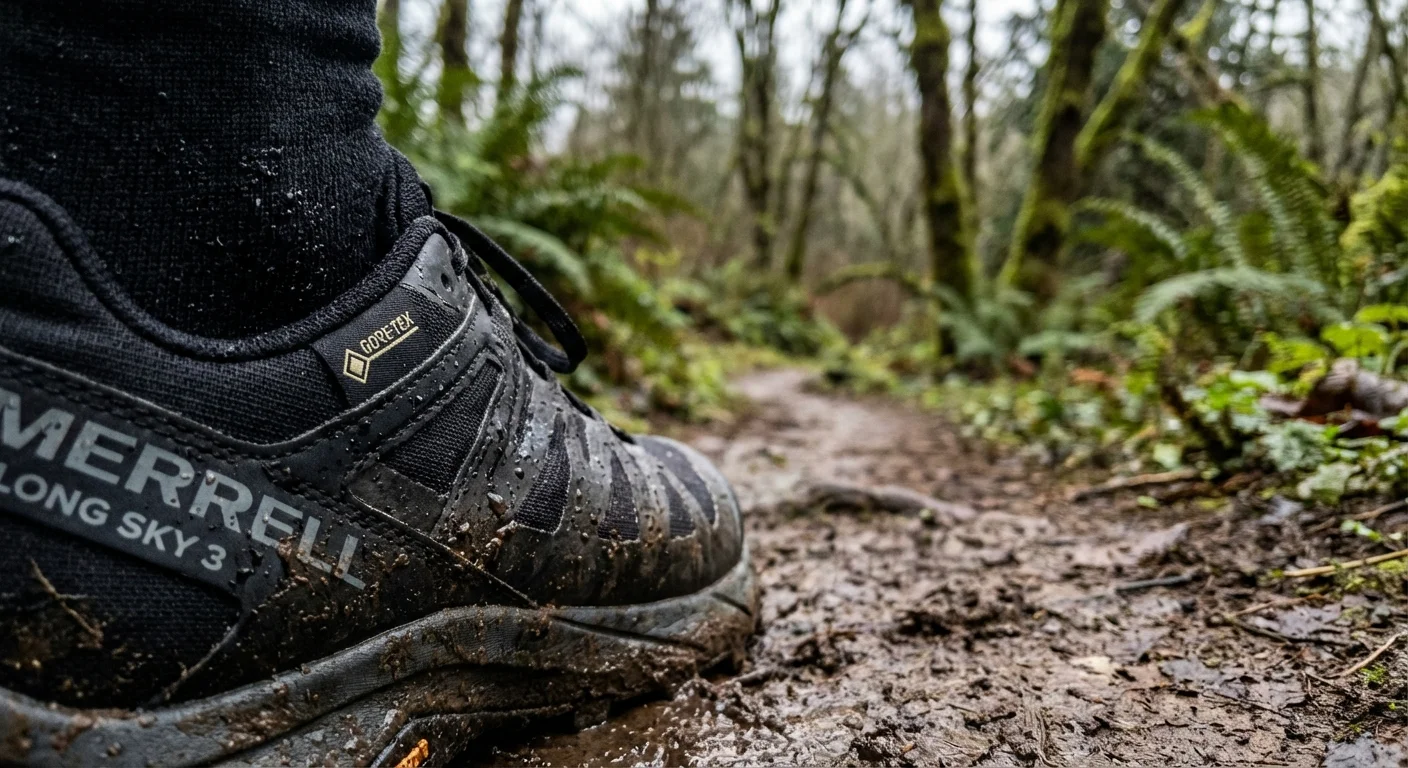
- Mud and wet trails: Merrell Long Sky 3 (deep 5mm lugs, Gore-Tex option)
- Mixed terrain: Merrell Nova 3 (all-around performer)
Pro tip: Check Merrell’s 2026 lineup online first. New models drop every spring and fall.
Step 2: Measure Your Feet Correctly
Don’t guess your shoe size. Feet change over time. Measure both feet at the end of the day. That’s when your feet are at their largest.
Stand on a piece of paper. Trace the outline of each foot. Measure the longest point from heel to toe. Use a Brannock device if you can visit a store. Always go with the bigger foot’s measurement.
Pro tip: Your trail shoe size is often a half-size larger than your street shoe. Your feet swell during long runs. This extra room prevents black toenails on downhill sections.
Step 3: Understand the Heel Drop
Heel drop is the height difference between heel and toe. It’s measured in millimeters. A lower drop means a more natural foot position. A higher drop offers more cushion under the heel.
Merrell trail running shoes come in several drop options. The Bare Access line sits at 0mm. The Agility Peak offers around 6mm. The Nova series gives you about 4mm. Pick based on your running style.
Pro tip: If you’re switching from road shoes with 10-12mm drop, don’t jump to zero-drop right away. Step down gradually. Go to 6mm first, then 4mm after a month.
Step 4: Check the Fit In-Store or At Home
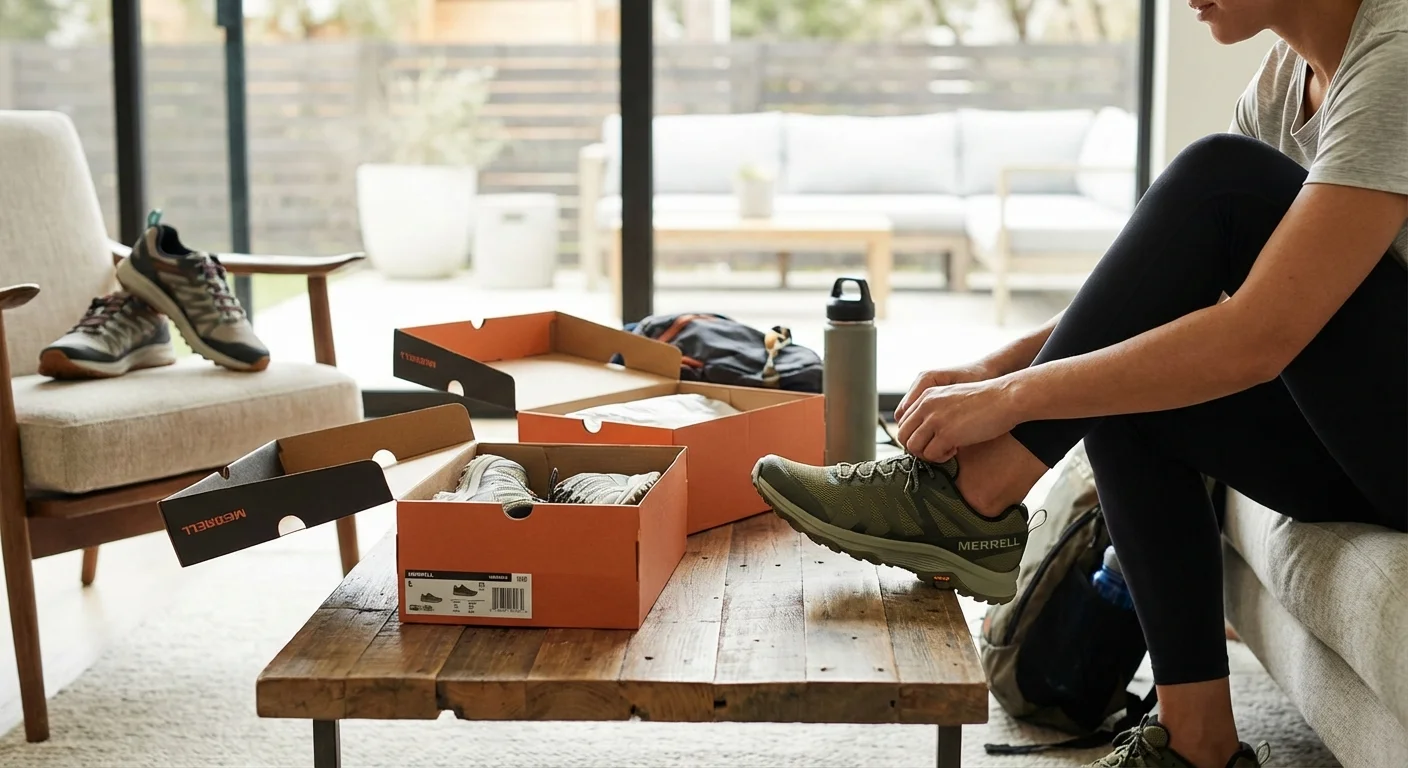
Try shoes on with your actual trail socks. Lace them up fully. Stand up and press your thumb on the toe box. You need about a thumb’s width of space between your longest toe and the front.
Walk around for at least 5 minutes. Check for heel slipping. Your heel should feel locked in. Check for pinching at the midfoot. Wiggle your toes. They should move freely.
Merrell offers a wide-toe-box design in most trail models. This matters a lot on long runs. Cramped toes cause blisters and numbness.
Pro tip: If you order online, Merrell offers free returns in 2026. Order two sizes and return the one that doesn’t fit.
Step 5: Begin the Break-In Process
New shoes need time to mold to your feet. Don’t run a 10-miler on day one. Start by wearing them around the house for 2-3 hours. This softens the materials gently.
Then take a short walk on a nearby trail. Keep it to 30 minutes or less. Pay attention to hot spots. Those warm areas on your feet signal future blisters.
Pro tip: Apply athletic tape to any hot spots before your next outing. This adds a protective layer while the shoe adjusts.
Step 6: Complete 3-5 Short Break-In Runs
Your first run should be 1.5-2 miles. Keep the pace easy. Focus on how the shoe feels, not your speed. After each run, check your feet for redness or irritation.
Increase distance by half a mile each run. By the fourth or fifth run, you should reach 3 miles comfortably. At this point, most Merrell trail running shoes feel broken in.
Space these runs 1-2 days apart. Give the shoe materials time to recover their shape between outings. Give your feet time to adapt too.
Pro tip: Run on similar terrain to where you’ll train long-term. Breaking in on pavement won’t prepare the shoe for rocky trails.
Step 7: Dial In Your Lacing Technique
Different lacing patterns solve different fit problems. A heel lock lacing pattern prevents heel slippage. Skip a lace hole at the pressure point if you feel midfoot tightness.
Here’s how to do the heel lock method:
- Lace normally up to the second-to-last eyelet.
- Thread each lace into the top eyelet on the same side. This creates a small loop.
- Cross each lace through the opposite loop.
- Pull tight and tie as normal.
Pro tip: Test your lacing on a short downhill section. Your toes shouldn’t slam the front of the shoe. Adjust until they don’t.
Step 8: Track Your Shoe Mileage
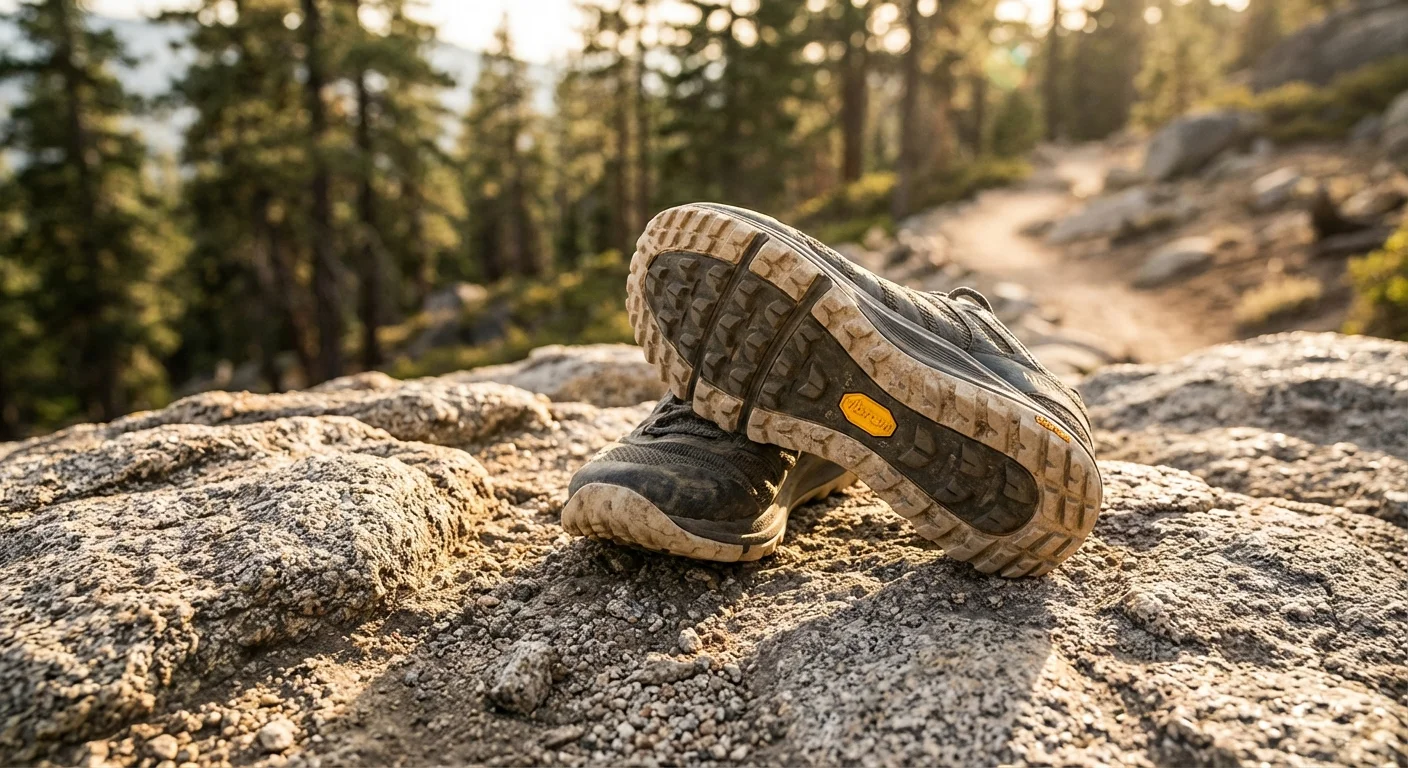
Every shoe has a lifespan. Merrell trail shoes with Vibram outsoles typically last 300-500 miles. After that, the cushion breaks down. The tread wears thin. Injury risk goes up.
Log your miles in an app like Strava or Garmin Connect. Both let you assign specific shoes to each run. This makes tracking easy and automatic.
Pro tip: Replace your shoes at 400 miles if you run on rocks. The midsole compresses faster on hard surfaces. For softer trails, you may get closer to 500 miles.
Pro Tips for Getting the Most From Your Merrell Trail Running Shoes
Expert Advice Beyond the Basics
Rotate two pairs: Alternate between two pairs of trail shoes. This gives each pair 48 hours to decompress. It extends each shoe’s life by up to 40%. It also reduces injury risk. If you’re comparing options, our what are the best long distance trail shoes? guide breaks down the key differences.
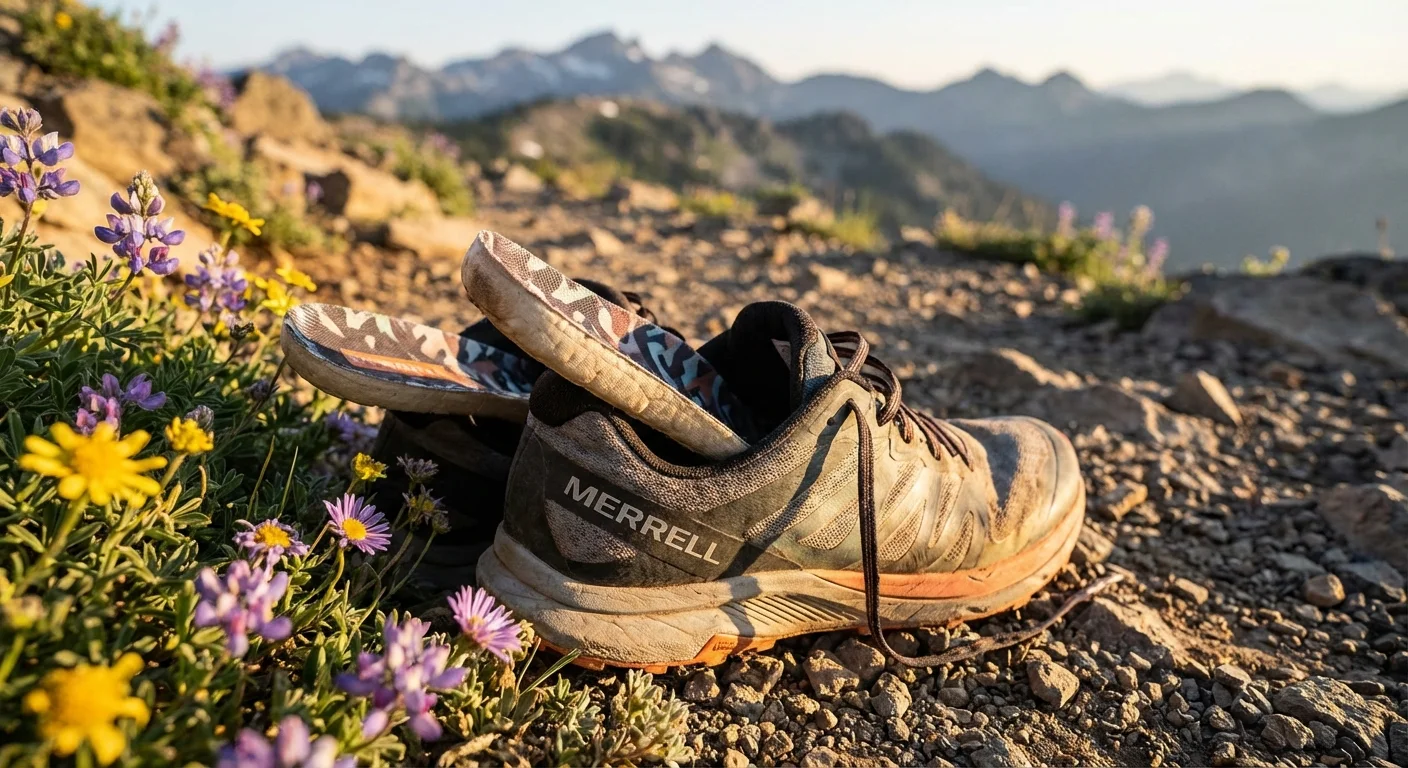
Remove insoles after runs: Pull out the insoles and loosen the laces after every run. This lets moisture escape. It prevents odor and bacterial growth. Your shoes will dry much faster.
Use aftermarket insoles: Merrell’s stock insoles are decent. But brands like Superfeet Green or Currex RunPro offer better arch support. They can improve comfort on runs over 5 miles.
Waterproof isn’t always better: Gore-Tex versions keep water out. But they also trap sweat inside. Choose waterproof only if you regularly run in rain or cross streams. For dry conditions, stick with mesh uppers.
Store shoes properly: Keep them at room temperature. Don’t leave them in a hot car. Heat breaks down the foam and glue. A cool, dry spot extends their life.
Troubleshooting Common Issues
Problem: Blisters on the Heels
Solution: Your heel is likely slipping. Try the heel lock lacing method from Step 7. Also check your sock fit. Loose socks bunch up and cause friction. Switch to a snug, crew-length trail sock. Brands like Injinji or Darn Tough work great.
Problem: Toes Feel Numb After 3 Miles
Solution: You’ve laced too tight over the midfoot. Loosen the laces across the top of your foot. Keep the heel area snug. Also, check your size. Numbness often means the shoe is too small. Go up a half size.
Problem: Shoe Feels Stiff and Uncomfortable
Solution: You may not have broken them in enough. Go back to Step 5. Do two more short walks. Then try another easy run. Some Merrell models, like the MQM 3, have a rock plate that feels stiff at first. It softens with use. We cover the full lineup in our cushioned trail running shoes feature.
Problem: Shoes Smell Bad After a Few Weeks
Solution: Remove the insoles after each run. Sprinkle baking soda inside and let it sit overnight. Shake it out before your next run. Never put your Merrell trail running shoes in the washing machine. It damages the glue and foam.
Problem: Slipping on Wet Rocks
Solution: Check your tread depth. Worn lugs can’t grip wet surfaces. If your lugs look flat, it’s time for new shoes. For extra grip on wet rock, look at the Merrell Agility Peak with Vibram Megagrip outsole. It’s designed for wet traction.
Frequently Asked Questions About Merrell Trail Running Shoes
Are Merrell trail running shoes good for beginners?
Yes. Merrell makes some of the best beginner-friendly trail shoes on the market. The Agility Peak 5 is a top pick for new trail runners in 2026. It offers good cushion, reliable grip, and a forgiving fit. The price is also fair, usually between $120 and $150.
How long do Merrell trail running shoes last?
Most Merrell trail shoes last between 300 and 500 miles. This depends on the terrain and your running style. Rocky trails wear shoes faster than soft dirt. Track your miles in an app so you know when to replace them.
Should I get waterproof Merrell trail shoes?
It depends on your local conditions. Waterproof versions (Gore-Tex) are great for rainy or snowy trails. But they hold in sweat during warm weather. If you run mostly in dry conditions, choose a breathable mesh version instead. Your feet will stay cooler and drier.
Do Merrell trail running shoes run true to size?
Merrell shoes generally run true to size for casual wear. But for trail running, go a half-size up. Your feet swell during runs. The extra space prevents toe jamming on downhill sections. Always measure your feet before ordering.
Can I use Merrell trail running shoes on pavement?
You can, but it’s not ideal. Trail shoe lugs wear down fast on hard pavement. The softer rubber compounds also lose grip on smooth concrete. For mixed use, try the Merrell Nova 3. It handles both light trails and short road sections well.
How do I clean my Merrell trail running shoes?
Remove the insoles first. Knock off dried mud by tapping the soles together. Use a soft brush and cool water to scrub the uppers. Let them air dry at room temperature. Never use a dryer or direct heat. It warps the shoe shape and breaks down adhesives.
What’s the difference between Merrell Agility Peak and Merrell Nova?
The Agility Peak has a higher heel drop (6mm) and more aggressive lugs. It’s built for technical trails. The Nova has a lower drop (4mm) and a more versatile tread. It works well on mixed terrain. Choose the Agility Peak for mountains. Choose the Nova for general trail running.
Final Thoughts on Your Merrell Trail Running Shoes
Choosing and breaking in Merrell trail running shoes doesn’t have to be hard. Follow these eight steps. Take your time with the break-in process. Pay attention to how your feet feel during each run.
The right pair will feel like an extension of your feet. It’ll grip when you need it. It’ll cushion on rocky descents. And it’ll keep you moving mile after mile.
Start with Step 1 today. Identify your terrain. Then pick the Merrell model that matches. Your trails are waiting.
