
Expert Reviewed
Updated Regularly
TITLE: How to Choose the Best Brooks Trail Shoes for Any Terrain in 2026
Finding the right brooks trail shoes can transform your off-road running experience. The wrong pair leads to blisters, sore ankles, and wasted money. The right pair feels like an extension of your feet.
This guide walks you through every step. You’ll learn how to pick the perfect Brooks trail shoe for your foot type, terrain, and budget. By the end, you’ll know exactly which model to grab and how to fit it right. Let’s get started.
Table of Contents
- Key Takeaways
- Quick Answer: How to Choose Brooks Trail Shoes
- Step-by-Step Guide to Choosing Brooks Trail Shoes
- Pro Tips for Getting the Most From Brooks Trail Shoes
- Troubleshooting Common Problems With Brooks Trail Shoes
- Caring for Your Brooks Trail Shoes Long-Term
- Frequently Asked Questions About Brooks Trail Shoes
Key Takeaways
- The Brooks Cascadia 18 is the best all-around trail shoe for most runners in 2026.
- Order a half size up from your road shoe size to allow toe room on descents.
- Replace your trail shoes every 300–500 miles to maintain grip and cushion.
- Match lug depth to terrain: 3–4mm for groomed trails, 5mm+ for mud and rocks.
- Use the wet-foot test to find your arch type before choosing a shoe model.
Quick Answer: How to Choose Brooks Trail Shoes
First, find your arch type with a simple wet-foot test. Then pick a Brooks trail model that matches your terrain. The Cascadia suits most trails. The Caldera works best for long ultras. The Catamount handles fast, technical ground. Order a half size up for the best fit.
What You’ll Need
- A shallow pan of water and a paper bag (for the wet-foot test)
- Your current running shoe size as a starting point
- A ruler or Brannock device for exact foot measurement
- A list of trails you run most often (terrain type matters)
- Your budget range ($100–$180 covers most Brooks trail models)
Step-by-Step Guide to Choosing Brooks Trail Shoes
Step 1: Determine Your Foot Arch Type
Wet the bottom of your foot. Step onto a brown paper bag. Look at the print your foot leaves behind.
A full, wide print means you have flat arches. A narrow, curved print means you have high arches. Something in between means neutral arches. Most people are neutral.
This matters because Brooks designs different shoes for each arch type. Flat-footed runners need more stability. High-arch runners need more cushion. Neutral runners have the widest range of choices.
Pro tip: Do this test later in the day. Your feet swell about a half size by evening. That gives you the most accurate reading.
Step 2: Measure Your Feet Correctly
Stand on a piece of paper. Trace around each foot with a pen. Measure the length from heel to longest toe.
Measure both feet. Most people have one foot slightly larger. Always size to the bigger foot.
Write down the width too. Brooks offers standard and wide (2E) options in many trail models. This detail alone can fix comfort problems.
Pro tip: Wear the socks you’ll run in when you measure. Thick trail socks add about 2–3mm of length.
Step 3: Identify Your Primary Terrain
Think about where you run most often. Different trails need different shoes. Here’s a simple breakdown:
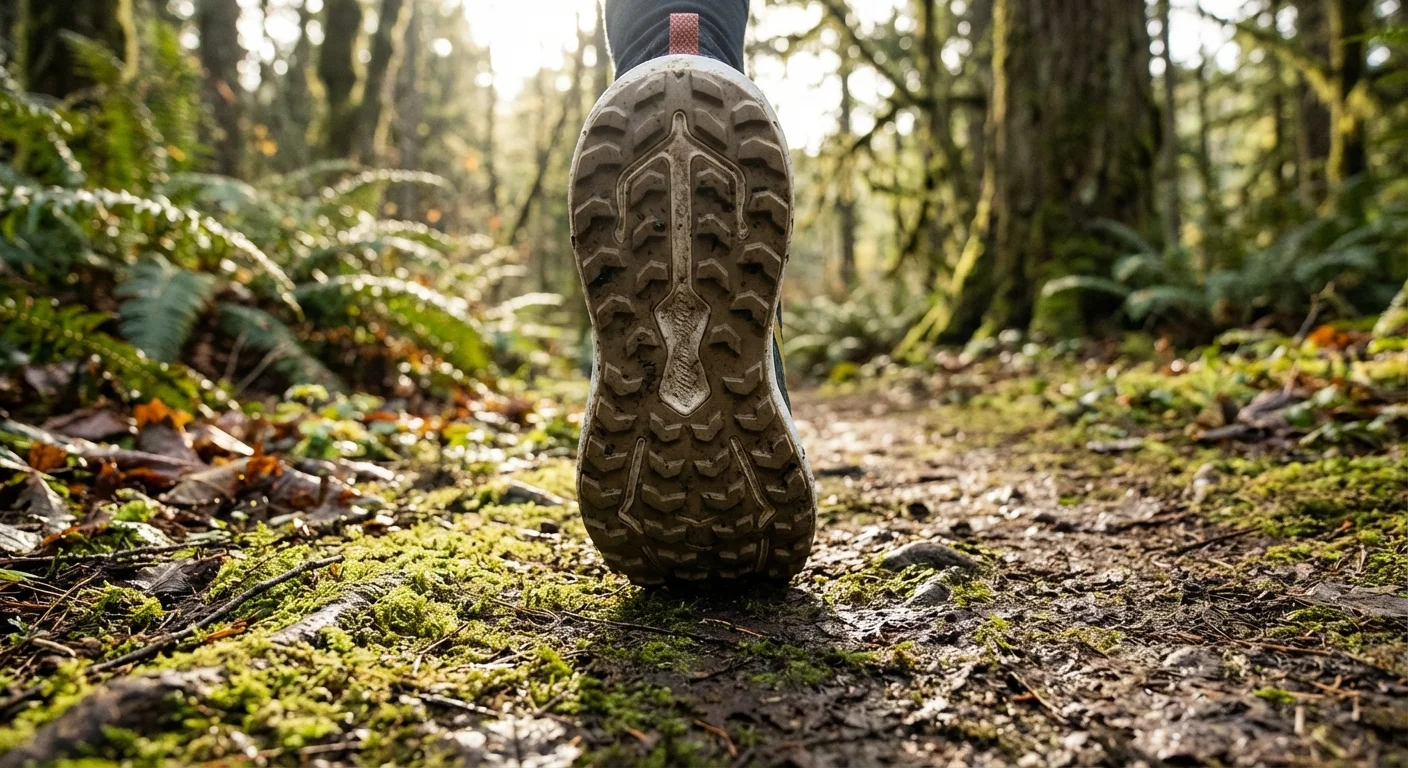
- Groomed dirt paths: Light trail shoes with 3–4mm lugs work great.
- Rocky, technical trails: You need a rock plate and deeper lugs (5mm+).
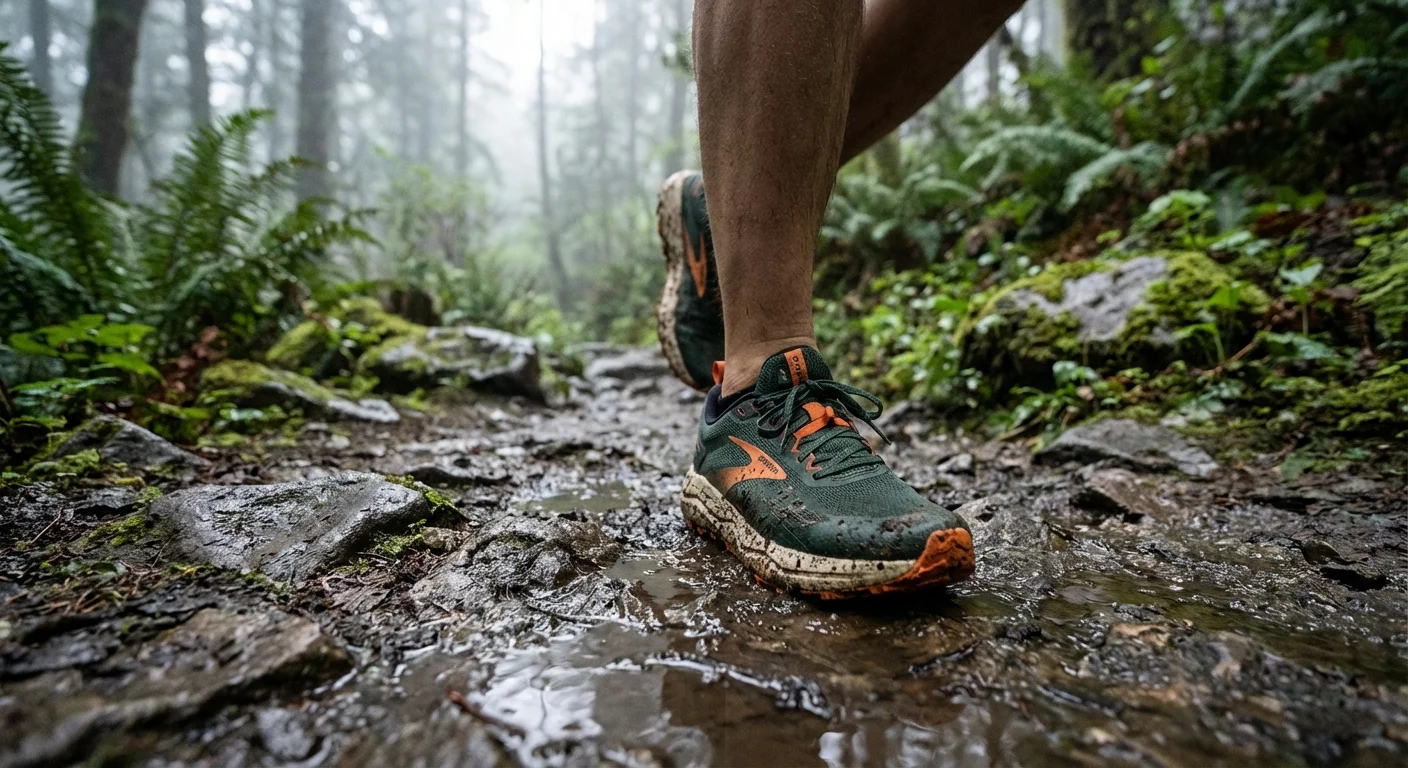
- Muddy or wet trails: Look for aggressive tread and quick-drain uppers.
- Mixed road and trail: A hybrid shoe with moderate tread is ideal.
Be honest about your terrain. Buying too aggressive a shoe wastes money and comfort on easy trails.
Pro tip: If you only buy one pair, pick a mid-range option. The Brooks Cascadia handles 80% of trail types well.
Step 4: Match Your Terrain to a Brooks Trail Shoe Model
Brooks makes several trail shoes in 2026. Each serves a different purpose. Here’s your cheat sheet:
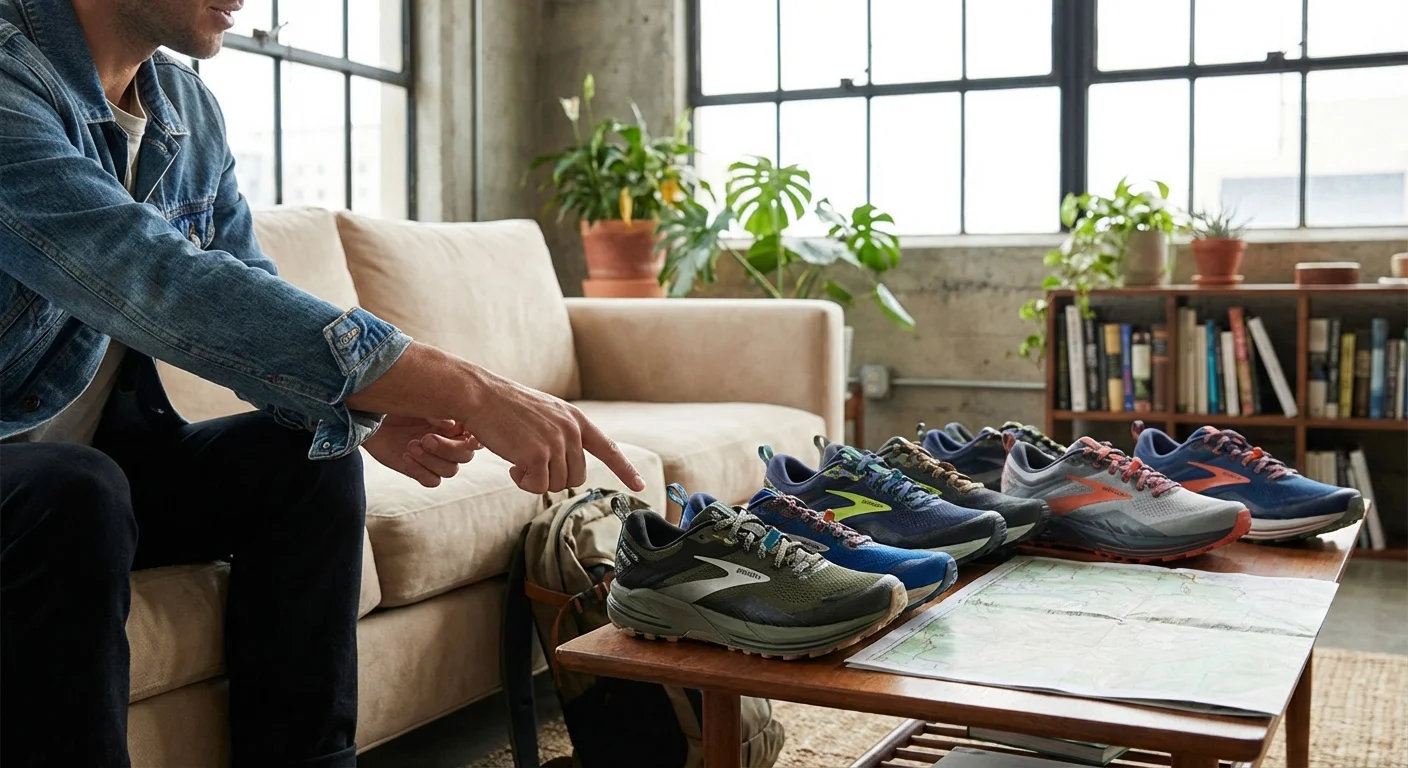
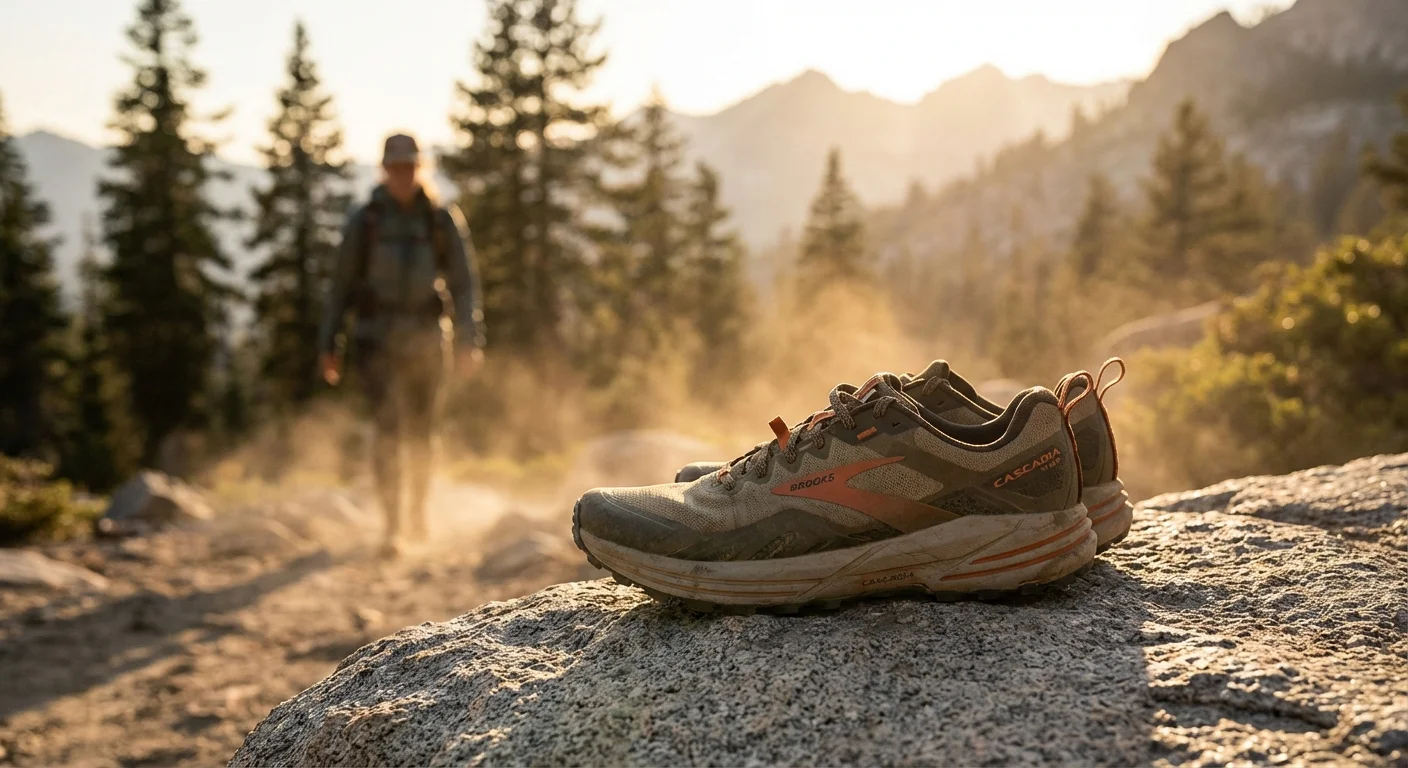
- Brooks Cascadia 18: The all-rounder. Great cushion and grip. Works on most trails. Best for beginners.
- Brooks Caldera 7: Maximum cushion for ultra distances. Soft ride over 30+ miles. Wider platform.
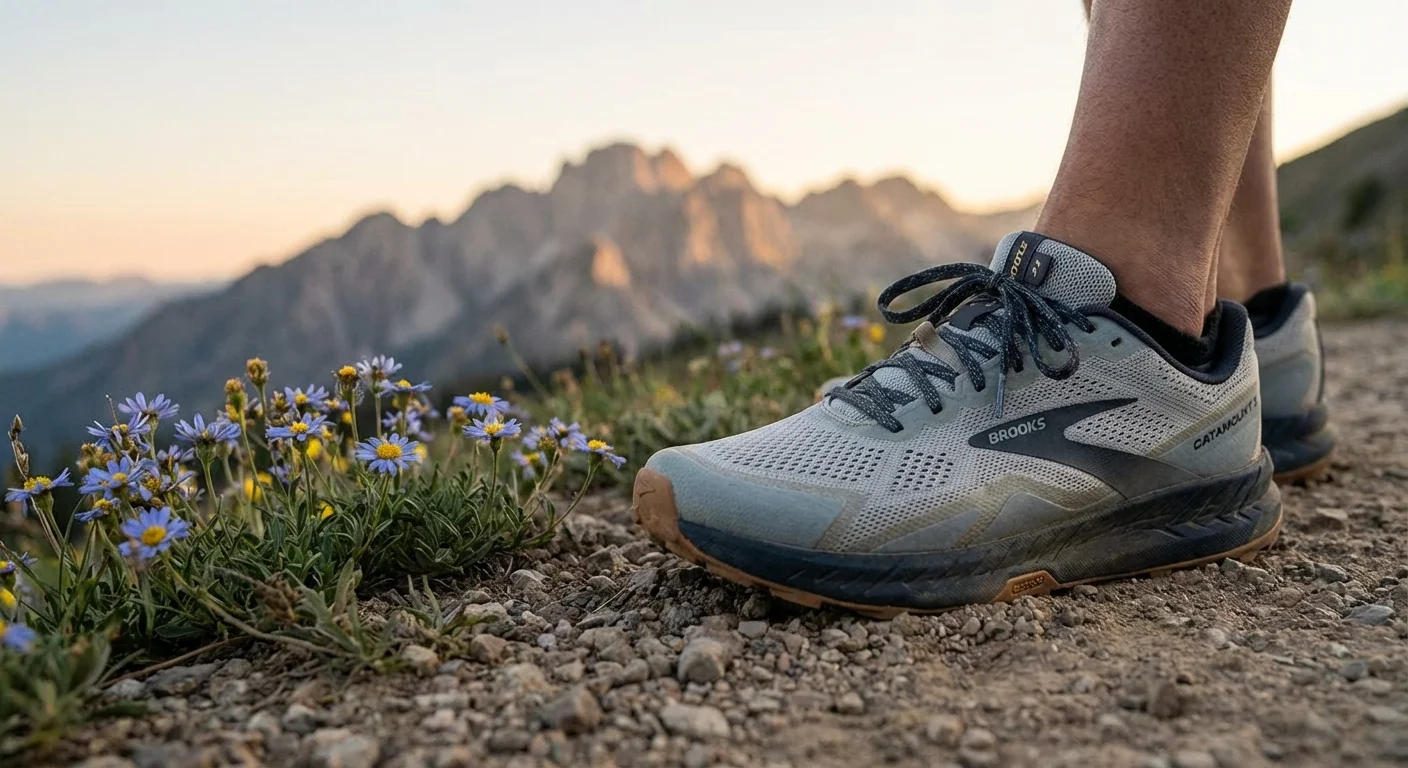
- Brooks Catamount 3: Fast and light. Built for speed on technical ground. Less cushion, more feel.
- Brooks Divide 5: Budget-friendly entry point. Good for light trails and mixed surfaces.
Most runners should start with the Cascadia. It’s Brooks’ flagship trail shoe for good reason.
Pro tip: Check Brooks’ website for their “Shoe Finder” quiz. It narrows choices in about 60 seconds.
Step 5: Choose the Right Size
Trail shoes should fit differently than road shoes. You need extra room in the toe box. Your feet slide forward on steep downhills.
Order a half size larger than your normal running shoe. This gives you about 6mm of extra space up front. That small gap prevents black toenails and blisters.
The heel should feel snug but not tight. You don’t want any slipping. A locked-in heel means better control on uneven ground.
Pro tip: Try shoes on with your trail running socks. Lace them up fully. Walk around for 10 minutes before you decide.
Step 6: Check the Drop and Cushion Level
The “drop” is the height difference between the heel and forefoot. It’s measured in millimeters. We tested several alternatives in our waterproof trail runners roundup.
Most brooks trail shoes have an 8mm drop. That’s a good middle ground. It feels natural for most runners.
Cushion level is personal. More cushion protects joints on long runs. Less cushion gives you better ground feel. The Caldera offers max cushion. The Catamount keeps it minimal.
Pro tip: If you’re switching from road shoes, match the drop first. A big drop change can cause calf or Achilles soreness. Looking for more options? Check out our nike trail runners buying guide.
Step 7: Test Them on a Short Run First
Don’t take new shoes on a 15-mile mountain run. Start with a short 2–3 mile trail jog. Pay attention to hot spots.
Notice how your toes feel on downhills. Check for heel slip on climbs. Feel the grip on loose gravel and roots.
Most retailers offer 30–90 day return policies. Brooks itself offers a 90-day trial. Use it. You can’t judge a trail shoe by standing in a store. Before you decide, it’s worth reading our outdoor running shoes deep dive.
Pro tip: Run your test on the hardest terrain you normally face. Easy trails won’t reveal problems. Looking for more options? Check out our hoka trail shoes women buying guide.
Step 8: Break Them In Gradually
Even the best shoes need a break-in period. Wear your new brooks trail shoes for short runs first. Build up distance over 2–3 weeks.
Alternate between your new and old shoes during this time. This lets your feet adjust without risking injury. Looking for more options? Check out our nike pegasus buying guide.
After 50 miles, the midsole will settle. The shoe will feel its best from mile 50 to mile 350. Our best running shoes for men review covers the specs and real-world performance in detail.
Pro tip: Track your shoe mileage with a running app. Strava and Garmin both let you log shoe usage. For a side-by-side look, see our best waterproof hiking shoes for men comparison guide.
Pro Tips for Getting the Most From Brooks Trail Shoes
1. Rotate two pairs. Having two pairs of trail shoes extends the life of both. It also lets you match shoes to terrain each run. Before you decide, it’s worth reading our salomon speedcross deep dive.
2. Use trail-specific socks. Merino wool socks from Darn Tough or Injinji prevent blisters. Cotton socks cause problems fast.
3. Clean them right. Remove mud after every run. Use cold water and a soft brush. Never put them in a dryer. Air dry only.
4. Replace at 300–500 miles. The outsole may look fine, but the midsole loses cushion. Worn midsoles lead to joint pain.
5. Buy last year’s model. The 2025 Cascadia 17 works almost as well as the 2026 version. You’ll save $30–$50 on closeout deals.
Troubleshooting Common Problems With Brooks Trail Shoes
Problem: Toes Hit the Front on Downhills
Solution: Your shoes are too small. Go up a half size. Also try a “heel lock” lacing pattern. This secures your heel and stops forward slide.
Problem: Blisters on the Sides of Your Feet
Solution: The shoe is too narrow. Switch to a wide (2E) version. The Cascadia and Caldera both come in wide widths. Pair them with moisture-wicking socks.
Problem: Shoes Feel Slippery on Wet Rocks
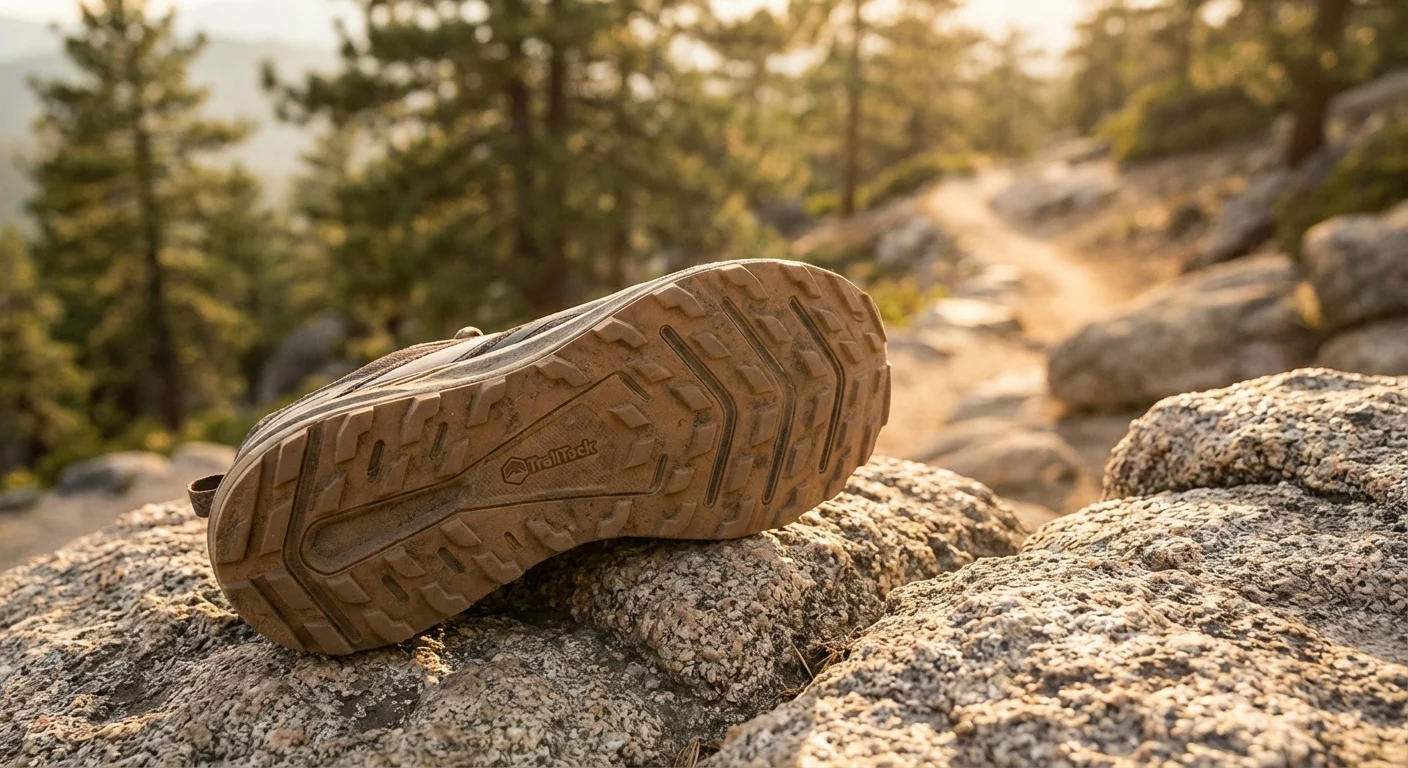
Solution: Check your lug depth. Worn lugs lose grip fast. If they’re new, the rubber compound may be wrong for your terrain. The Cascadia uses TrailTack rubber. It grips wet surfaces better than standard rubber. You might also find our altra road running shoes comparison helpful when narrowing down your choices.
Problem: Feet Feel Bruised After Rocky Runs
Solution: You need a shoe with a rock plate. The Cascadia 18 has a built-in rock plate. The Divide does not. Upgrade to a model with underfoot protection. If you’re comparing options, our nike running shoes guide breaks down the key differences.
Caring for Your Brooks Trail Shoes Long-Term
Good care doubles the life of your shoes. Remove insoles after wet runs. Stuff newspaper inside to absorb moisture. Store them in a cool, dry place. Before you decide, it’s worth reading our mens waterproof running shoes deep dive.
Never machine wash your brooks trail shoes. Hot water breaks down the glue. A soft brush and cold water are all you need.
Replace laces when they fray. Broken laces mid-run are dangerous on technical trails. Keep a spare pair in your gear bag.
Frequently Asked Questions About Brooks Trail Shoes
Are Brooks trail shoes good for beginners?
Yes. Brooks makes some of the most beginner-friendly trail shoes on the market. The Cascadia 18 is the top choice for new trail runners. It offers great cushion, solid grip, and a forgiving fit. The Divide 5 is another good entry-level option at a lower price point around $100.
How long do Brooks trail shoes last?
Most brooks trail shoes last 300–500 miles. Rocky terrain wears them faster. Soft dirt trails extend their life. Check the lugs and midsole every 100 miles. When the lugs look smooth or the cushion feels flat, it’s time for a new pair.
Can I use Brooks trail shoes on pavement?
You can, but it’s not ideal. The soft rubber lugs wear down quickly on pavement. Short road sections between trails are fine. For regular road-to-trail running, choose the Brooks Divide. It’s built for mixed surfaces.
What’s the difference between the Cascadia and the Catamount?
The Cascadia is a cushioned, protective all-rounder. It weighs about 10.9 oz. The Catamount is a lightweight speed shoe at about 8.8 oz. Pick the Cascadia for comfort on long runs. Pick the Catamount for fast races on technical terrain.
Do Brooks trail shoes run true to size?
They run slightly small for trail use. Most runners go up a half size from their road shoe. This gives your toes room to spread on descents. If you’re between sizes, always choose the larger option.
Are Brooks trail shoes waterproof?
Most Brooks trail shoes are not waterproof. They use breathable mesh uppers. Some models offer Gore-Tex versions for wet climates. Check the product name for “GTX” if you need waterproofing. Keep in mind that waterproof shoes trap sweat inside.
