

Expert Reviewed
Updated Regularly
If you’ve ever asked “what is the difference between a trail and hiking shoe?” you’re not alone. Millions of outdoor lovers face this question every year. Both shoes look similar on store shelves. Both promise comfort on rough terrain. But they serve different purposes. Picking the wrong one can lead to sore feet, poor grip, or wasted money. This guide breaks down the real differences. We’ll compare top models side by side. You’ll learn which shoe fits your needs best in 2026.
Table of Contents
- Key Takeaways
- Quick Comparison: Trail Shoes vs. Hiking Shoes
- What Is the Difference Between a Trail and Hiking Shoe? The Basics
- Individual Product Breakdowns
- Head-to-Head: Trail Shoes vs. Hiking Shoes on Key Criteria
- Price and Value Analysis
- What Real Buyers Are Saying
- Our Recommendation: Which Shoe Should You Buy?
- FAQ: Common Questions About Trail vs. Hiking Shoes
Key Takeaways
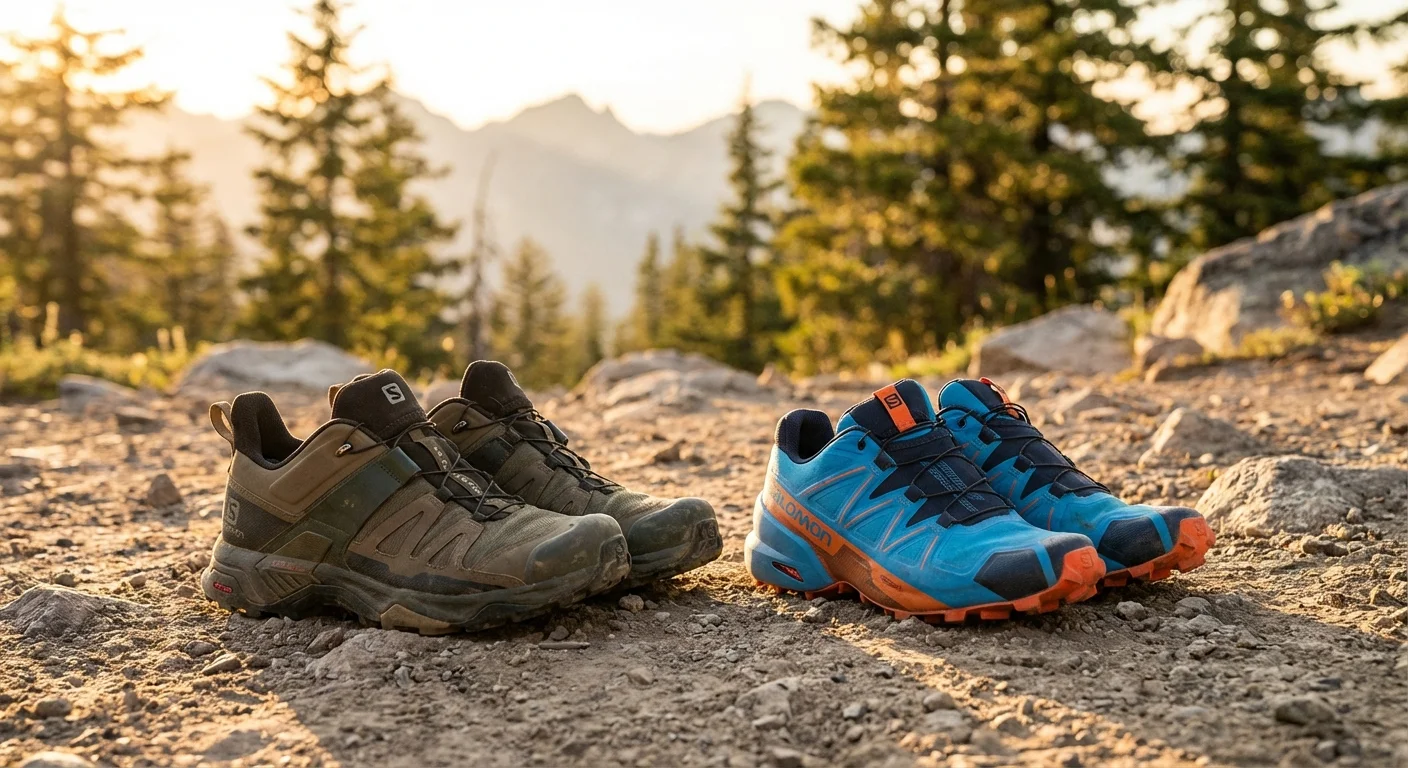
- Trail running shoes weigh 30–40% less than hiking shoes, averaging 9–11 oz versus 14–18 oz per shoe.
- Hiking shoes like the Merrell Moab 3 ($110) offer stiffer soles and more ankle support than trail runners.
- Trail runners like the Salomon Speedcross 6 ($140) excel at fast-paced movement on single-track paths.
- Hiking shoes last 500–1,000 miles on average, while trail runners wear out closer to 300–500 miles.
- Choose trail runners for speed and light loads; choose hiking shoes for heavy packs and rocky ground.
Quick Comparison: Trail Shoes vs. Hiking Shoes
| Feature | Salomon Speedcross 6 (Trail) | Merrell Moab 3 (Hiking) | Hoka Speedgoat 6 (Trail) | Salomon X Ultra 4 (Hiking) |
|---|---|---|---|---|
| Price | $140 | $110 | $155 | $135 |
| Weight (per shoe) | 10.9 oz | 15.5 oz | 10.2 oz | 13.4 oz |
| Drop | 10 mm | 12 mm | 4 mm | 10.5 mm |
| Sole Stiffness | Flexible | Moderate-Stiff | Flexible | Moderate |
| Waterproof Option | Yes (GTX) | Yes (WP) | Yes (GTX) | Yes (GTX) |
| Best For | Fast trail runs, mud | Day hikes, rocky trails | Long trail runs, cushion | All-day hikes, mixed terrain |
| Our Rating | 4.5/5 | 4.4/5 | 4.6/5 | 4.5/5 |
What Is the Difference Between a Trail and Hiking Shoe? The Basics
Trail shoes and hiking shoes share one goal. They help you move safely on unpaved ground. But they do it in very different ways.
Trail Running Shoes Explained
Trail running shoes are built for speed. They’re lightweight and flexible. Most weigh between 9 and 11 ounces.
The soles are softer and bendable. This lets your foot move naturally at a running pace. Tread patterns are aggressive but shallow. They grip mud and loose dirt well.
Cushioning sits low to the ground. This gives you a better feel for the terrain below. The uppers use thin mesh for airflow. They dry fast after creek crossings.
Hiking Shoes Explained
Hiking shoes focus on support and protection. They weigh 13 to 18 ounces on average. The soles are stiffer, which helps on rocky trails.
Thicker midsoles absorb shock over long distances. The rubber outsoles have deeper lugs. These bite into gravel and stone more than soft mud.
Uppers use thicker materials like leather or reinforced mesh. This shields your feet from sharp rocks. Many models include toe bumpers and heel counters for extra safety.
Individual Product Breakdowns
Hoka Speedgoat 6
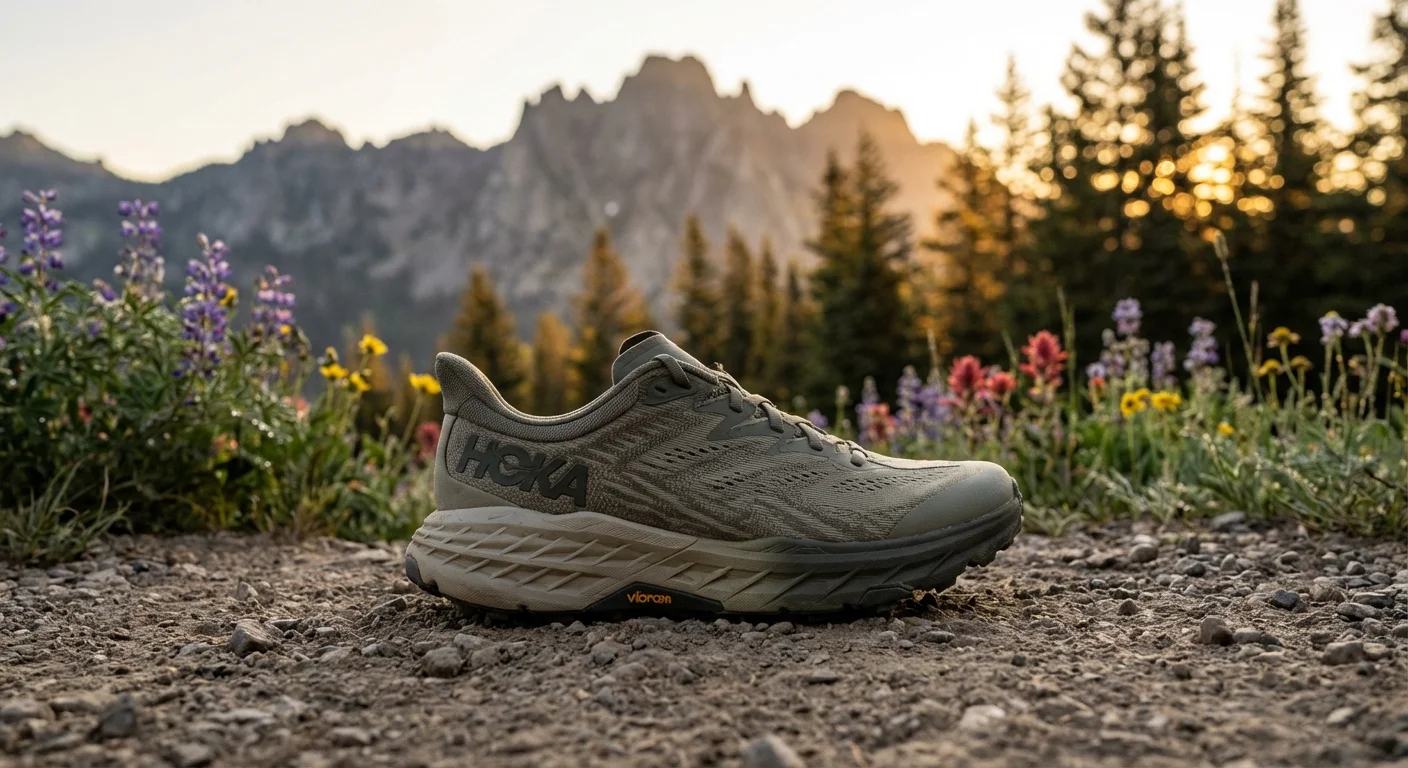
The Hoka Speedgoat 6 is a top trail runner in 2026. It weighs just 10.2 ounces. That’s light enough for long races and fast day runs. The Vibram Megagrip outsole bites into wet rock and loose gravel. It has 5 mm lugs that handle mud without clogging.
Hoka’s signature cushioning shines here. The midsole uses dual-density foam. It absorbs impact on downhill sections. The 4 mm drop encourages a midfoot strike. This reduces knee strain over time.
The upper is breathable and quick-drying. A gusseted tongue keeps debris out. The fit runs true to size. It handles technical single-track with ease. But it’s not ideal for heavy backpacking. The soft sole doesn’t support loads over 15 pounds well.
$155
- Best-in-class cushioning for trail running
- Vibram Megagrip outsole with 5 mm lugs
- Only 10.2 oz per shoe
- Great wet-rock traction
- Too soft for heavy pack support
- Wears out around 350 miles
- Narrow toe box for wide feet
Salomon Speedcross 6
The Salomon Speedcross 6 is a legend in trail running. It costs $140 and weighs 10.9 ounces. The Contagrip MA outsole uses deep, claw-like lugs. These dig into soft ground like no other shoe.
This shoe dominates in mud and wet conditions. The lugs are spaced wide apart. Mud sheds quickly with each step. An EnergyCell+ midsole gives firm, responsive cushioning.
The Quicklace system speeds up your start. One pull tightens the whole shoe. A SensiFit cradle wraps your foot for a secure hold. The Ortholite insole adds comfort on longer runs.
It’s not the best on hard rock. Those deep lugs feel unsteady on flat stone. And it runs a half size small. Order up if you’re between sizes. For soft-terrain trail running, it’s hard to beat at this price.
$140
- Best mud traction available
- Fast Quicklace system
- Durable Contagrip outsole
- Secure SensiFit cradle
- Poor on hard rock surfaces
- Runs small—size up
- Limited breathability
Salomon X Ultra 4
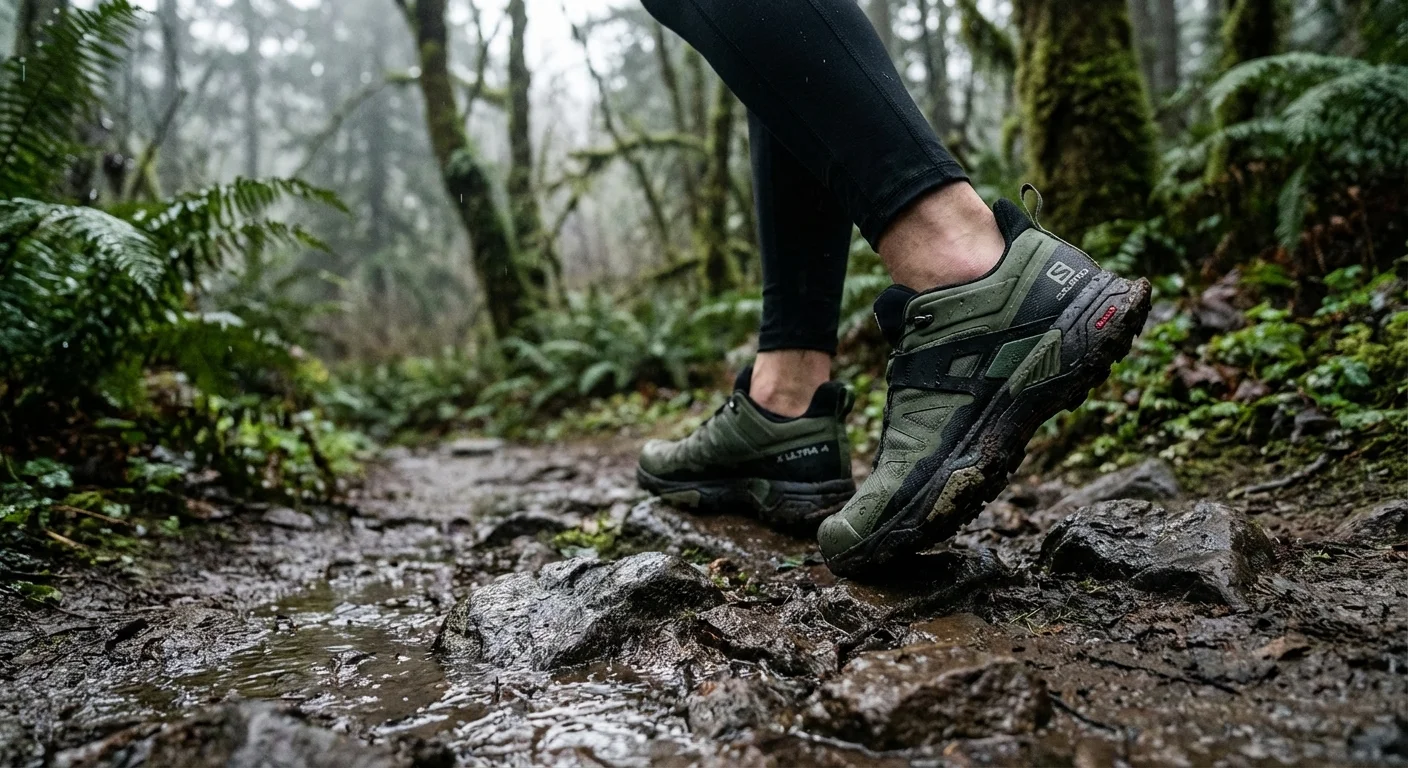
The Salomon X Ultra 4 blurs the line between hiker and trail runner. At 13.4 ounces, it’s lighter than most hiking shoes. But it offers more support than any trail runner.
The Advanced Chassis sits between the outsole and midsole. It controls motion on uneven ground. This reduces ankle rolls on rocky paths. The Contagrip MA outsole provides strong grip on all surfaces.
Salomon uses a foam midsole that balances comfort and stability. It handles day hikes with packs up to 25 pounds. The upper combines mesh and synthetic overlays. A Gore-Tex version keeps feet dry in rain.
The fit is snug in the midfoot and roomy in the toe box. It breaks in fast—usually within 10 miles. This shoe works for day hikes, light backpacking, and even fast hiking. It’s our top hiking shoe pick for 2026.
$135
- Advanced Chassis prevents ankle rolls
- Light for a hiking shoe at 13.4 oz
- Handles packs up to 25 lbs
- Quick break-in period
- Not stiff enough for heavy backpacking
- Gore-Tex version costs $30 more
- Laces can come untied on long hikes
Merrell Moab 3
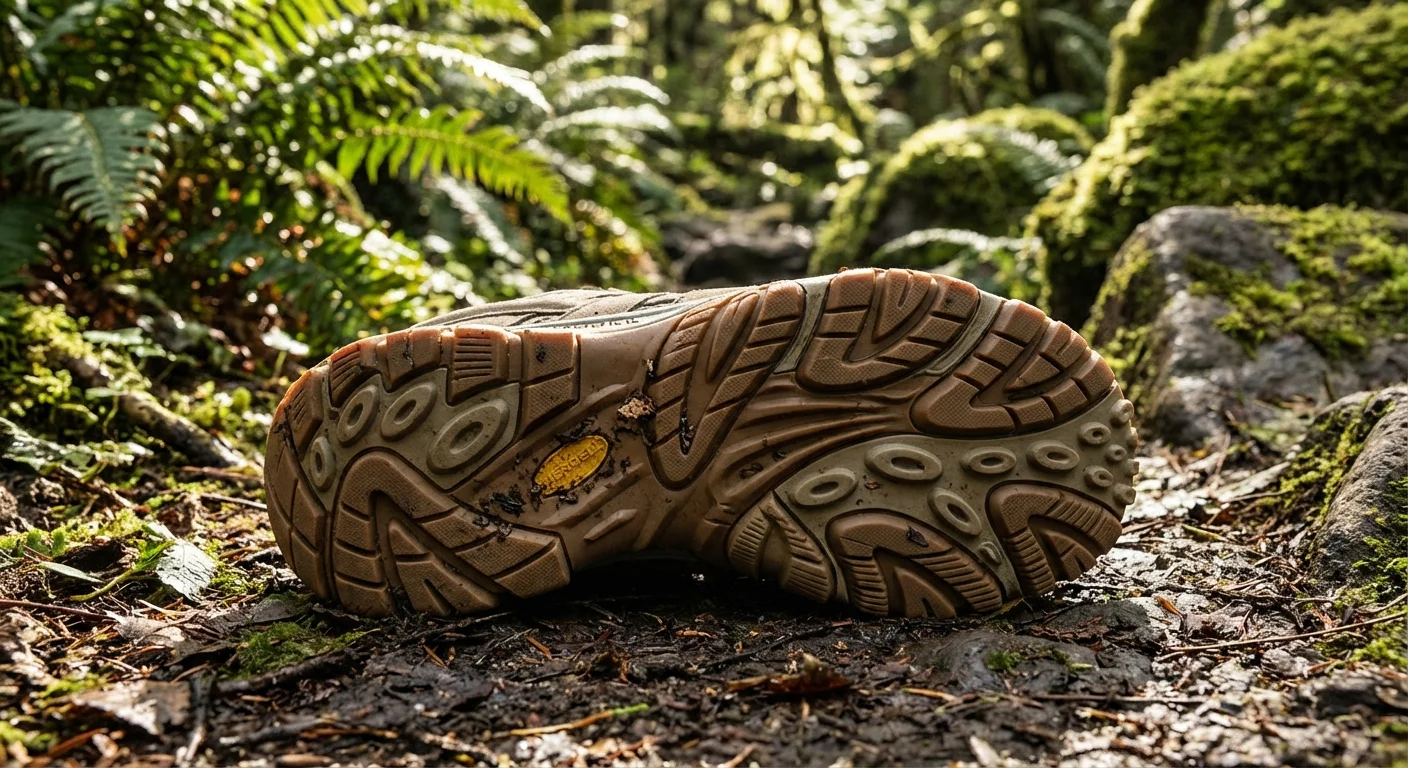
The Merrell Moab 3 is the best-selling hiking shoe in North America. It costs just $110. At 15.5 ounces, it’s heavier than others here. But that weight brings extra protection.
The Vibram TC5+ outsole grips rock and packed dirt well. Deep 5 mm lugs handle loose gravel. A Bellows tongue keeps out sand and small stones. The toe bumper protects against stubs.
Merrell’s air cushion in the heel absorbs shock. It helps on long downhill sections. The suede and mesh upper breathes well for a hiking shoe. A waterproof version adds a membrane liner.
The Moab 3 fits wide feet best. It runs true to size. The midsole stays supportive with packs up to 30 pounds. It’s the right pick for hikers who want classic comfort without a big price tag.
$110
- Lowest price in this roundup at $110
- Wide-foot friendly design
- Vibram outsole lasts 800+ miles
- Supports packs up to 30 lbs
- Heaviest shoe here at 15.5 oz
- Less nimble on technical terrain
- Midsole compresses after 600 miles
Head-to-Head: Trail Shoes vs. Hiking Shoes on Key Criteria
Weight and Speed
Trail runners win here by a wide margin. The Hoka Speedgoat 6 weighs 10.2 oz. The Merrell Moab 3 weighs 15.5 oz. That’s a 34% difference per shoe. See how this model stacks up in our what is the most comfortable trail shoe? analysis.
Over a 10-mile run, lighter shoes save your legs real energy. Studies show each extra ounce on your foot costs 1% more effort. Trail runners let you move 5–10% faster on average.
Support and Stability
Hiking shoes take this category. The Salomon X Ultra 4’s Advanced Chassis prevents lateral roll. The Merrell Moab 3 has a stiffer platform that absorbs heavy loads.
Trail runners flex more. This feels great at a run. But it can strain your ankles on rough terrain with a pack. If you carry more than 15 pounds, hiking shoes are safer.
Traction and Grip
This one depends on the surface. Trail runners grip soft terrain better. The Speedcross 6’s deep lugs tear through mud. Hiking shoes grip hard surfaces better. The Moab 3’s Vibram rubber sticks to wet rock.
On mixed terrain, hiking shoes offer more reliable traction. Trail runner lugs can feel slippery on flat stone.
Durability
Hiking shoes last much longer. The Merrell Moab 3 holds up for 800 to 1,000 miles. The Hoka Speedgoat 6 starts breaking down around 350 miles. That’s less than half the lifespan.
Hiking shoes use thicker rubber and tougher uppers. Trail runners trade durability for lightness. You’ll replace trail runners 2–3 times for every pair of hiking shoes. Looking for more options? Check out our what kind of shoes are best for trails? buying guide.
Comfort Over Distance
Both types feel great—for their purpose. Trail runners cushion fast footfalls. Hiking shoes support slow, loaded steps. The Speedgoat 6’s foam beats everything for running comfort. The X Ultra 4 wins for all-day walking comfort. We tested several alternatives in our is nike trail good for walking? roundup.
Knowing what is the difference between a trail and hiking shoe helps you match comfort to your activity. Speed demands flex. Distance with weight demands stiffness.
Price and Value Analysis
Budget picks matter for most buyers. Here’s how the value breaks down at each price point.
At $110, the Merrell Moab 3 is the best deal for hikers. It lasts 800+ miles. That’s about $0.14 per mile. No other shoe here matches that long-term value.
At $135–$140, you choose between the Salomon X Ultra 4 and Speedcross 6. The X Ultra 4 costs $0.18 per mile over 750 miles. The Speedcross 6 costs $0.35 per mile over 400 miles. Hikers get more value. Runners pay a premium for speed.
At $155, the Hoka Speedgoat 6 costs about $0.44 per mile. That’s expensive. But its cushioning protects your joints better than any other trail shoe. If you run 20+ miles a week on trails, the comfort savings are worth it.
So what is the difference between a trail and hiking shoe in terms of value? Hiking shoes always cost less per mile. Trail runners cost more but deliver performance you can’t get from a stiffer shoe.
What Real Buyers Are Saying
“I switched from the Moab 3 to the Speedgoat 6 for my trail runs. Night and day difference. My pace dropped by 45 seconds per mile. But I still wear the Moab for weekend hikes with my kids.”
“The Salomon X Ultra 4 is the most versatile shoe I own. I’ve worn it on rocky trails in Utah and muddy paths in Oregon. 500 miles in, and it still looks great.”
“I wanted one shoe for everything. Got the Speedcross 6. It’s amazing in mud but slippery on rock. I ended up buying a hiking shoe too. Should’ve read this guide first.”
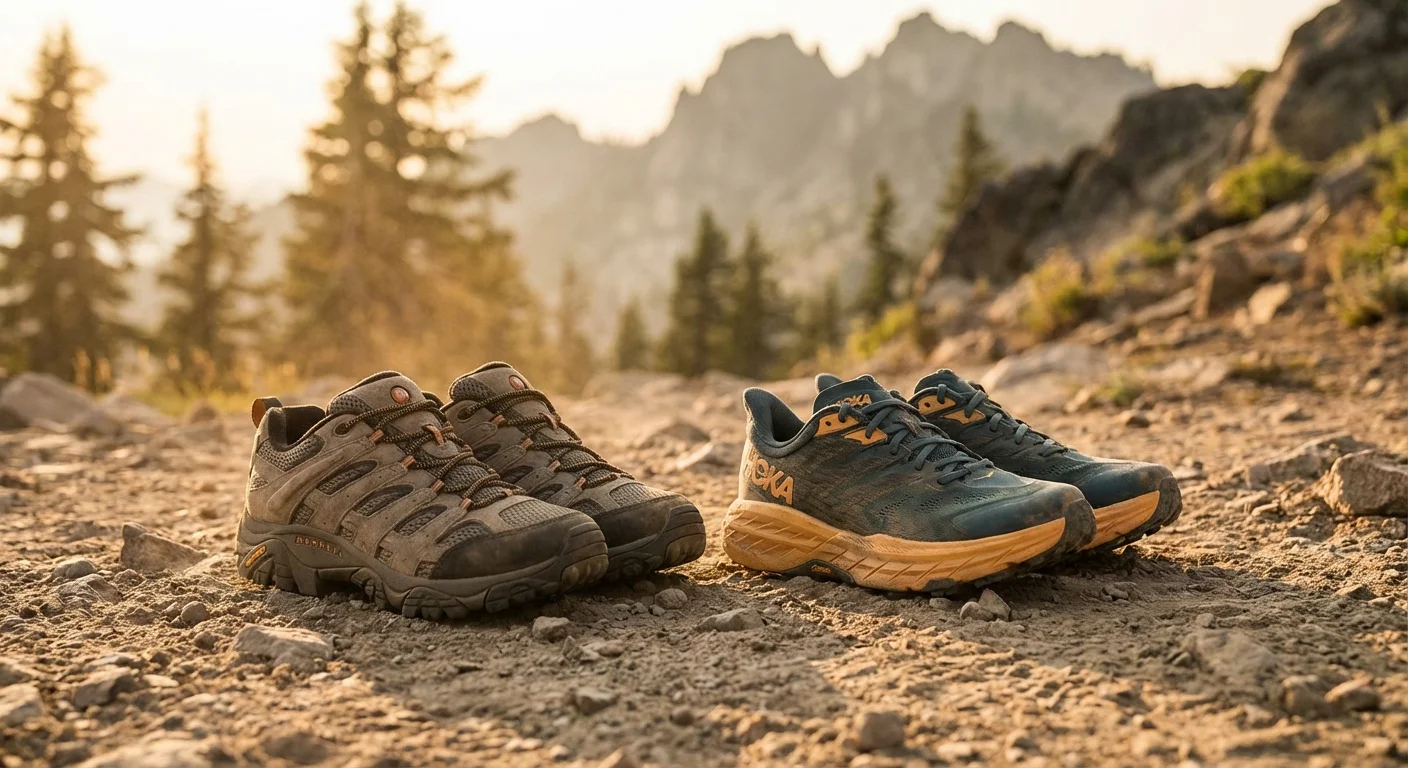
Our Recommendation: Which Shoe Should You Buy?
For trail runners: Get the Hoka Speedgoat 6. It offers the best cushioning and grip for fast movement. At $155, it protects your joints on long runs. It’s our top trail pick for 2026.
For day hikers: Get the Salomon X Ultra 4. It balances weight, support, and grip better than anything else. At $135, it handles most trails with ease. It’s great for hikers who like to move fast.
For budget hikers: Get the Merrell Moab 3. At $110, it’s the cheapest and most durable option. It supports heavier packs and wide feet. You’ll get 800+ miles from a single pair.
For mud runners: Get the Salomon Speedcross 6. Nothing matches its grip in wet, soft terrain. The Quicklace system is a bonus. Just avoid hard rock surfaces.
Now you know what is the difference between a trail and hiking shoe. The right choice depends on your speed, your terrain, and your pack weight. Pick the one that matches how you move outdoors.
FAQ: Common Questions About Trail vs. Hiking Shoes
Can I use trail running shoes for hiking?
Yes, you can. Many hikers use trail runners for day hikes with light loads. They work best when you carry under 15 pounds. For heavier packs or rocky terrain, hiking shoes are safer. Trail runners wear out faster on hikes too.
Can I use hiking shoes for trail running?
It’s not a good idea. Hiking shoes weigh 30–40% more. They’re stiffer and slower. Running in them can cause blisters and joint pain. They weren’t built for a running stride.
What is the difference between a trail and hiking shoe for beginners?
The biggest difference is stiffness and weight. Trail shoes flex easily and weigh less. Hiking shoes are rigid and heavier. Beginners who walk should start with hiking shoes. Beginners who run should start with trail runners.
Do I need waterproof trail or hiking shoes?
It depends on your climate. Waterproof shoes keep feet dry in rain and snow. But they trap heat and sweat in summer. Most people do fine without waterproofing in warm weather. Choose waterproof versions for wet or cold trails.
How often should I replace trail and hiking shoes?
Replace trail runners every 300–500 miles. Replace hiking shoes every 500–1,000 miles. Watch for worn-out lugs and compressed midsoles. Both are signs that your shoes can’t protect your feet well anymore.
Are trail shoes good for everyday walking?
Trail shoes work fine for casual walks. They’re comfy and lightweight. But the aggressive tread wears down fast on pavement. You’ll shorten their lifespan by 30–40% if you wear them on concrete daily.
