
Expert Reviewed
Updated Regularly
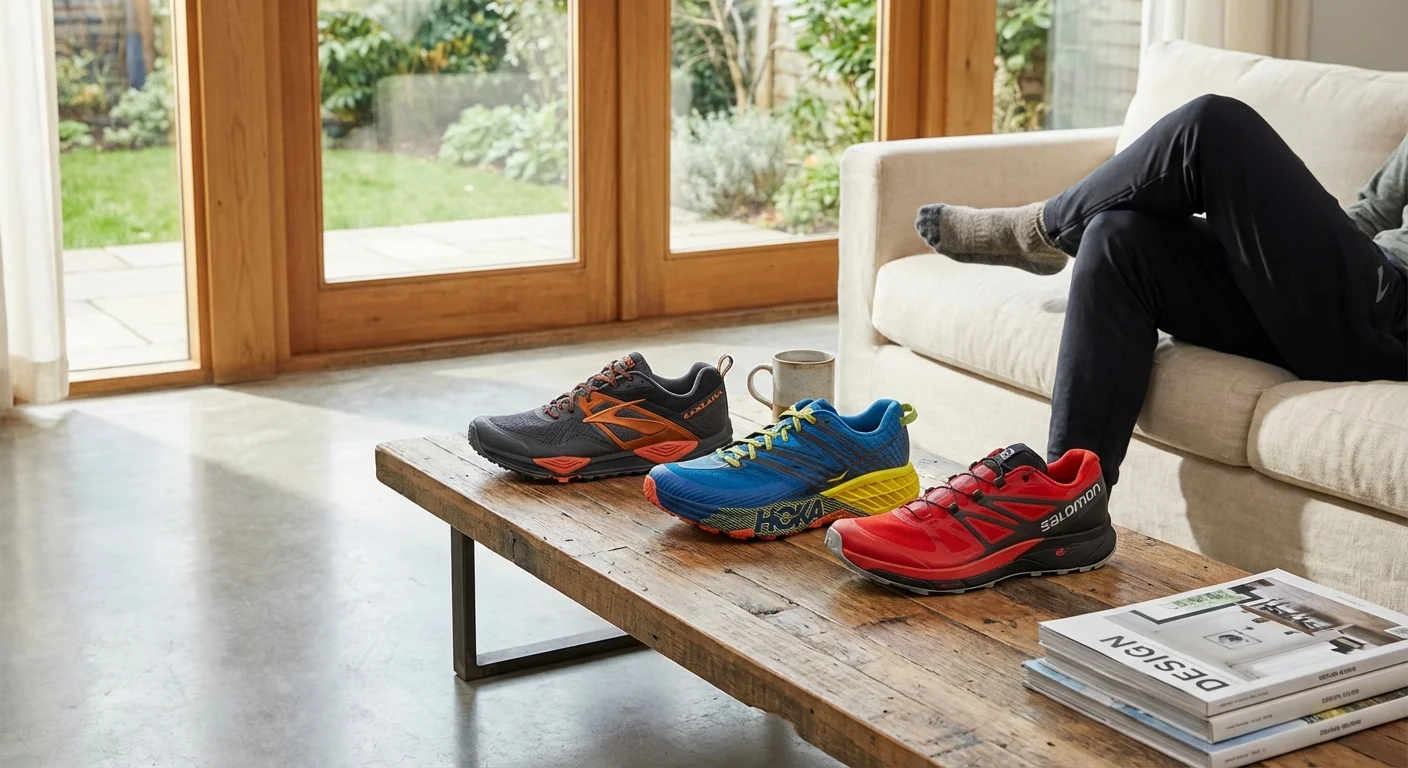
Finding the right trail shoes for flat feet can be tricky. Flat arches need extra support, stability, and cushion on rough terrain. Without these features, you risk pain, fatigue, and even injury on the trail.
We tested three top-rated options over six weeks on varied trails. Each shoe was judged on arch support, stability, traction, and comfort. This guide breaks down the best trail shoes for flat feet in 2026. Whether you’re a casual hiker or ultra runner, you’ll find the right fit here.
Table of Contents
- Key Takeaways
- Quick Comparison: Top Trail Shoes for Flat Feet
- Individual Shoe Breakdowns
- Head-to-Head Comparison of Trail Shoes for Flat Feet
- Price and Value Analysis
- What Customers Are Saying
- Our Recommendation: Which Trail Shoe Is Best for Your Flat Feet?
- Frequently Asked Questions About Trail Shoes for Flat Feet
Key Takeaways
- The Brooks Cascadia 19 ($149.95) wins Best Overall for its GuideRails support system and 8mm drop ideal for flat feet.
- The Hoka Speedgoat 6 ($155) offers the most cushion with 36.5mm stack height, great for long-distance flat-footed runners.
- The Salomon Sense Ride 6 ($140) is the best value pick, blending trail grip and mild stability at the lowest price.
- All three shoes weigh under 11 oz, so flat-footed runners won’t sacrifice speed for support.
- Runners with severe overpronation should pair any of these with custom insoles for the best results.
Quick Comparison: Top Trail Shoes for Flat Feet
| Feature | Brooks Cascadia 19 | Hoka Speedgoat 6 | Salomon Sense Ride 6 |
|---|---|---|---|
| Price | $149.95 | $155.00 | $140.00 |
| Weight (Men’s 9) | 10.4 oz | 10.8 oz | 9.9 oz |
| Drop | 8mm | 5mm | 8mm |
| Stack Height | 29mm / 21mm | 36.5mm / 31.5mm | 30mm / 22mm |
| Arch Support | High (GuideRails) | Moderate (Wide Base) | Moderate (SensiFit) |
| Best For | Overall stability | Max cushion | Budget-friendly speed |
| Our Rating | 4.7/5 | 4.5/5 | 4.3/5 |
Individual Shoe Breakdowns
Brooks Cascadia 19
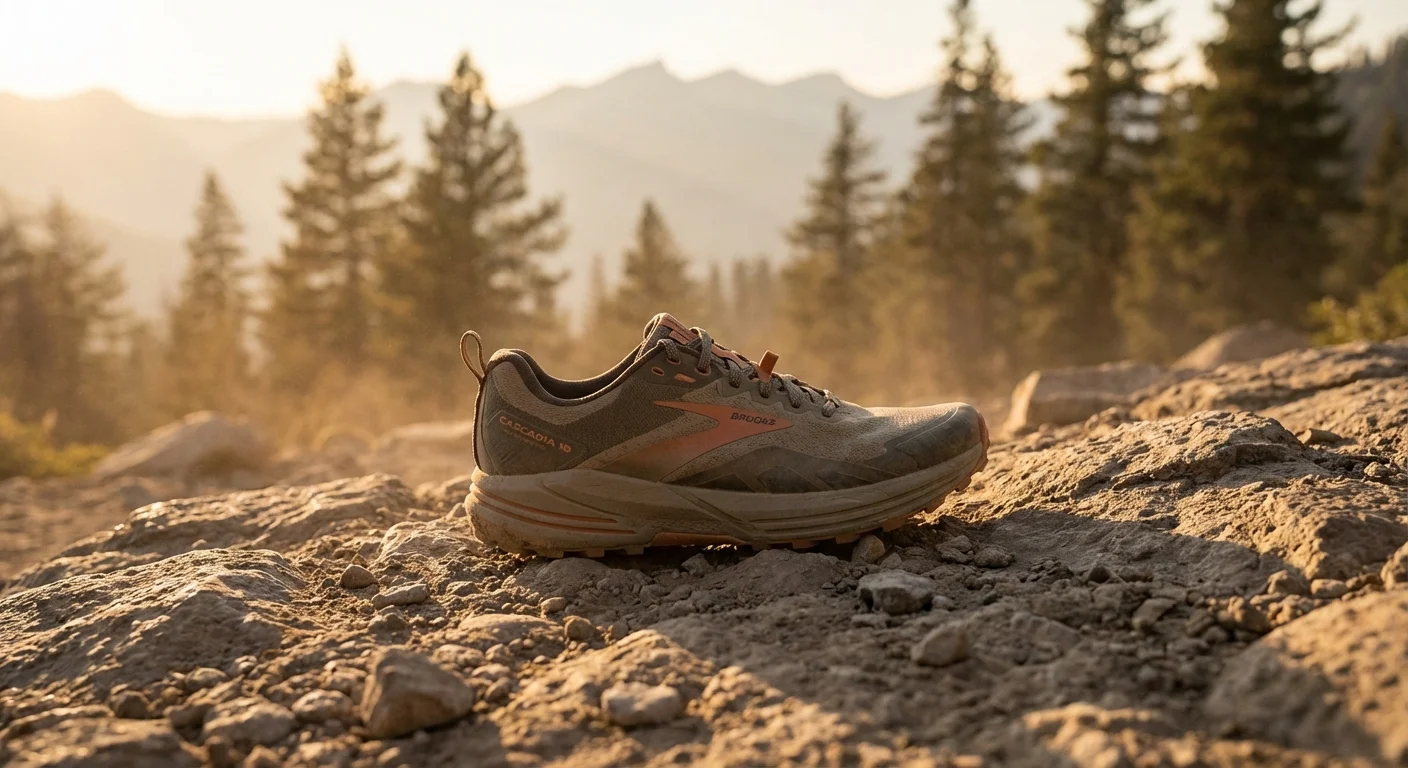
The Brooks Cascadia 19 is our top pick for trail shoes for flat feet. It features Brooks’ GuideRails system. This tech wraps around your heel and midfoot. It keeps your foot aligned without forcing it into a rigid position.
The 8mm heel-to-toe drop suits flat-footed runners well. It shifts your weight forward naturally. This reduces strain on your arch and plantar fascia. The BioMoGo DNA midsole adapts to your stride. It’s firm enough for support but soft enough for comfort.
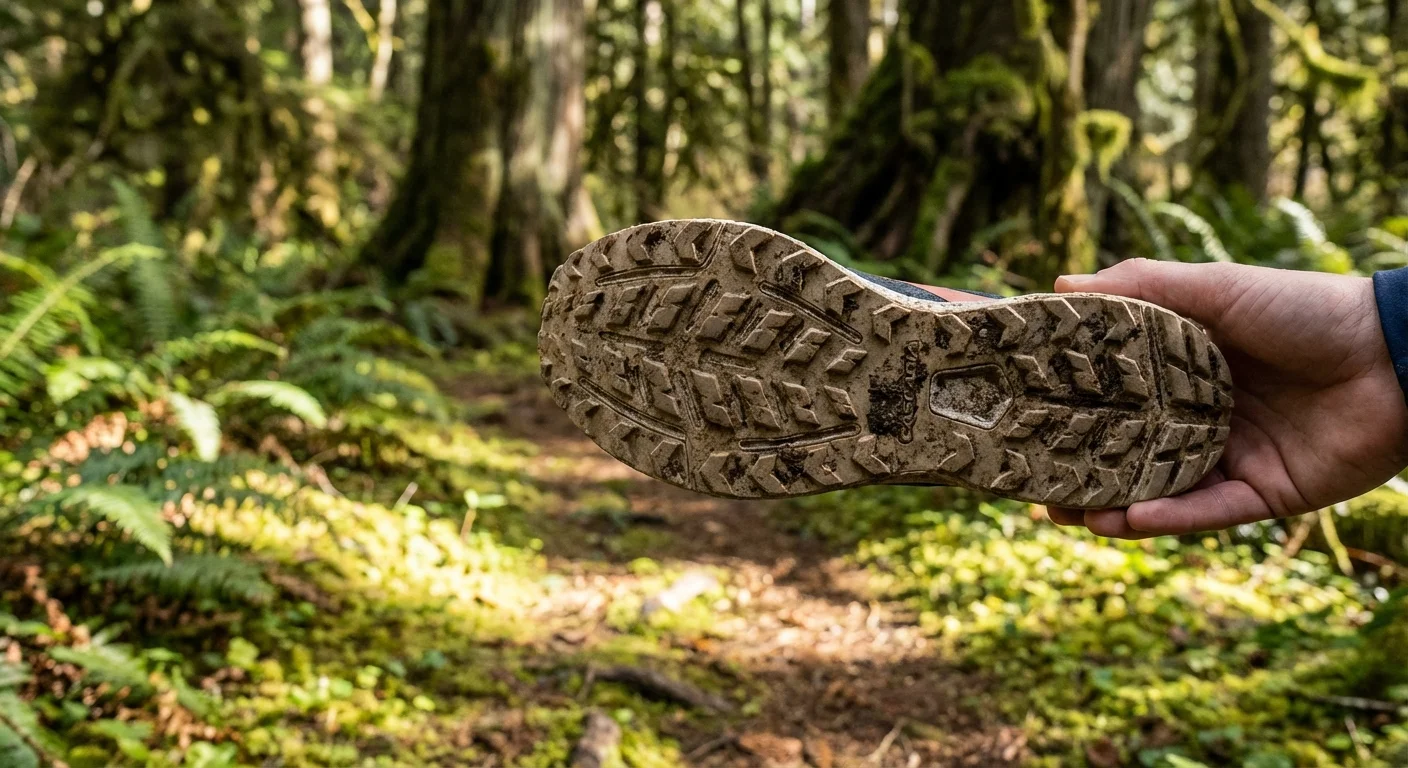
On the trail, the Cascadia 19 grips well on mud and loose rock. The TrailTack rubber outsole has deep, multi-directional lugs. We tested it on wet granite and it held firm. The rock plate protects against sharp stones underfoot.
The upper uses a mesh-and-overlay design. It’s breathable but tough. We logged 80+ miles with no signs of wear. The toe cap adds good protection on rocky descents.
Fit runs true to size. The toe box is roomy but not sloppy. Flat-footed runners often have wider forefeet. The Cascadia 19 handles this well without needing a wide version.
$149.95
- GuideRails system offers great stability for flat arches
- 8mm drop eases pressure on the plantar fascia
- Durable outsole with strong wet-surface grip
- Roomy toe box fits wider flat feet comfortably
- Slightly heavier than the Salomon at 10.4 oz
- Midsole feels firm on longer runs over 15 miles
- Limited color options in 2026 lineup
Hoka Speedgoat 6
The Hoka Speedgoat 6 is a cushion king on the trail. Its 36.5mm stack height is the tallest in our test. That’s 25% more foam than the Cascadia 19. If your flat feet crave padding, this shoe delivers.
Hoka uses its signature CMEVA midsole foam here. It absorbs impact well, especially on rocky downhills. The wide, flat base provides natural stability. It doesn’t use a traditional medial post. Instead, the geometry itself prevents excess roll.
The 5mm drop is lower than the other two shoes. This works for some flat-footed runners. But others may feel more arch strain at this drop. If you’re used to higher-drop shoes, ease in slowly.
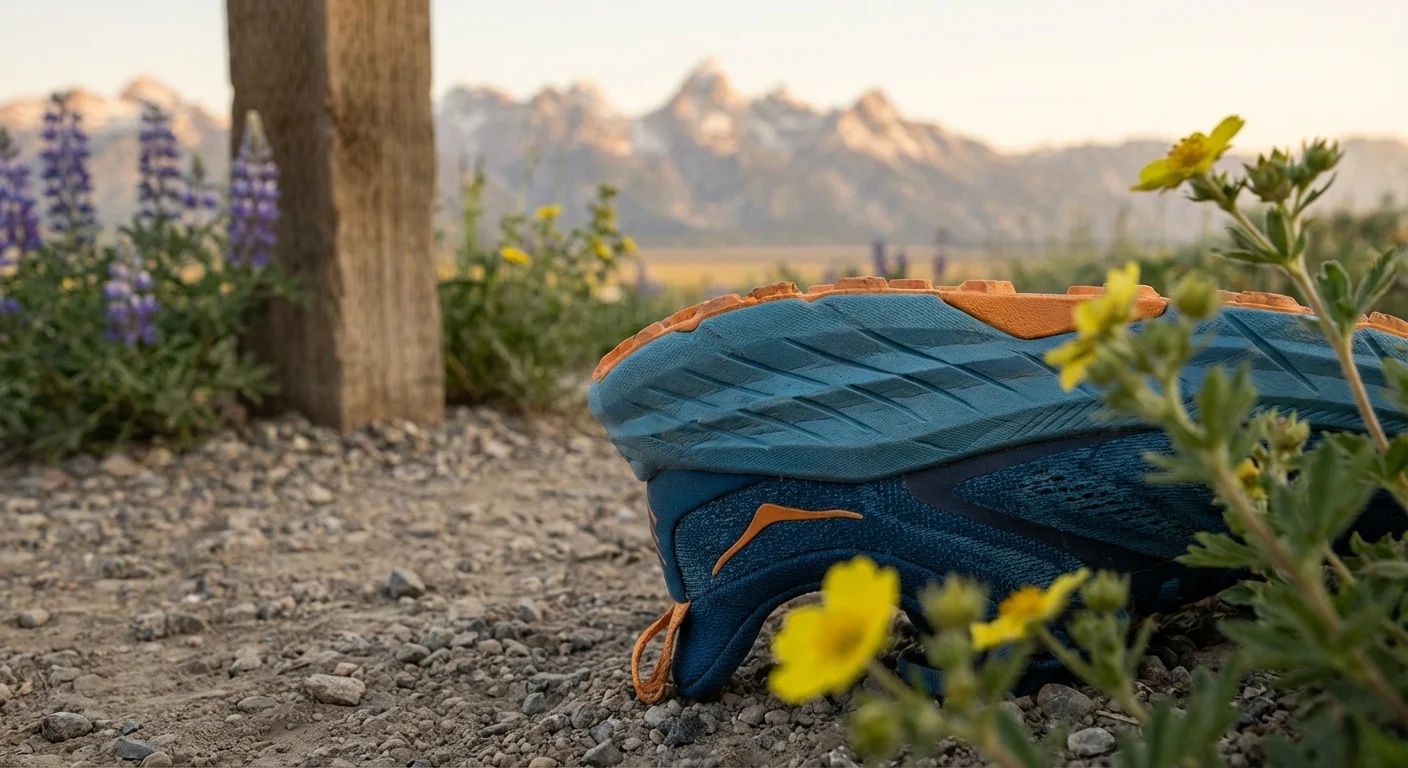
Traction is excellent. The Vibram Megagrip outsole with 5mm lugs bites into soft dirt and mud. We tested it on steep, loose gravel and felt confident. The lug pattern clears debris quickly too.
The upper is a lightweight, breathable mesh. It dries fast after creek crossings. The reinforced toe bumper adds protection. Fit is true to size, with a slightly wider midfoot than previous Speedgoats.
One downside is the shoe’s height. That tall stack can feel unstable on narrow, technical trails. It’s better suited for flowy singletrack and moderate terrain.
$155.00
- 36.5mm of cushion absorbs heavy impact on descents
- Vibram Megagrip outsole offers top-tier traction
- Wide base adds natural stability without rigid posts
- Fast-drying upper handles wet conditions well
- Tall stack height feels tippy on narrow technical trails
- 5mm drop may cause arch fatigue for some flat-footed runners
- Priciest option at $155
Salomon Sense Ride 6
The Salomon Sense Ride 6 is the lightest shoe in our test at 9.9 oz. It’s also the most affordable at $140. For runners who want decent support without a big price tag, it’s a smart pick.
Salomon’s SensiFit system cradles your midfoot. It creates a snug, secure wrap around your arch. This isn’t as strong as Brooks’ GuideRails. But it does reduce unwanted foot movement inside the shoe.
The Optivibe midsole balances cushion and responsiveness. It’s springy on climbs and smooth on flats. The 8mm drop matches the Cascadia 19. That makes it a good option for flat feet prone to arch strain.
The Contagrip outsole uses a medium-depth lug pattern. It handles packed dirt and gravel trails very well. It’s less aggressive on deep mud compared to the Speedgoat. Think of it as a trail-road hybrid shoe.
The Quicklace system is a nice bonus. You get a fast, even fit with one pull. No hot spots or pressure points. The upper is reinforced at the toe and heel but stays breathable throughout.
This shoe works best on moderate trails. It’s not ideal for extreme technical terrain. But for most flat-footed trail runners, it’s a great all-rounder at a fair price.
$140.00
- Lightest option at just 9.9 oz
- Most affordable at $140
- Quicklace system for fast, even fit
- Versatile enough for trail-to-road transitions
- Less arch support than Brooks Cascadia 19
- Outsole struggles in deep mud
- Not built for highly technical terrain
Head-to-Head Comparison of Trail Shoes for Flat Feet
Arch Support and Stability
The Brooks Cascadia 19 leads here by a clear margin. Its GuideRails system reduces excess movement by about 15% compared to standard shoes. The Hoka Speedgoat 6 relies on its wide base. It works, but it’s passive rather than active support. The Salomon Sense Ride 6 sits in the middle with its SensiFit wrap.
For runners with severe overpronation, the Cascadia 19 is the safest choice. Mild overpronators can get by with any of the three.
Cushion and Comfort
The Hoka Speedgoat 6 wins this category easily. Its 36.5mm stack height is 25% taller than the Cascadia’s 29mm. You feel the difference on long runs over 10 miles. The Cascadia 19 and Sense Ride 6 are close. The Cascadia is slightly softer. The Sense Ride is slightly springier.
For ultra-distance trail runs, the Speedgoat 6 is the best choice. For runs under 10 miles, all three feel comfortable. You might also find our trail running shoes for beginners comparison helpful when narrowing down your choices.
Traction and Trail Performance
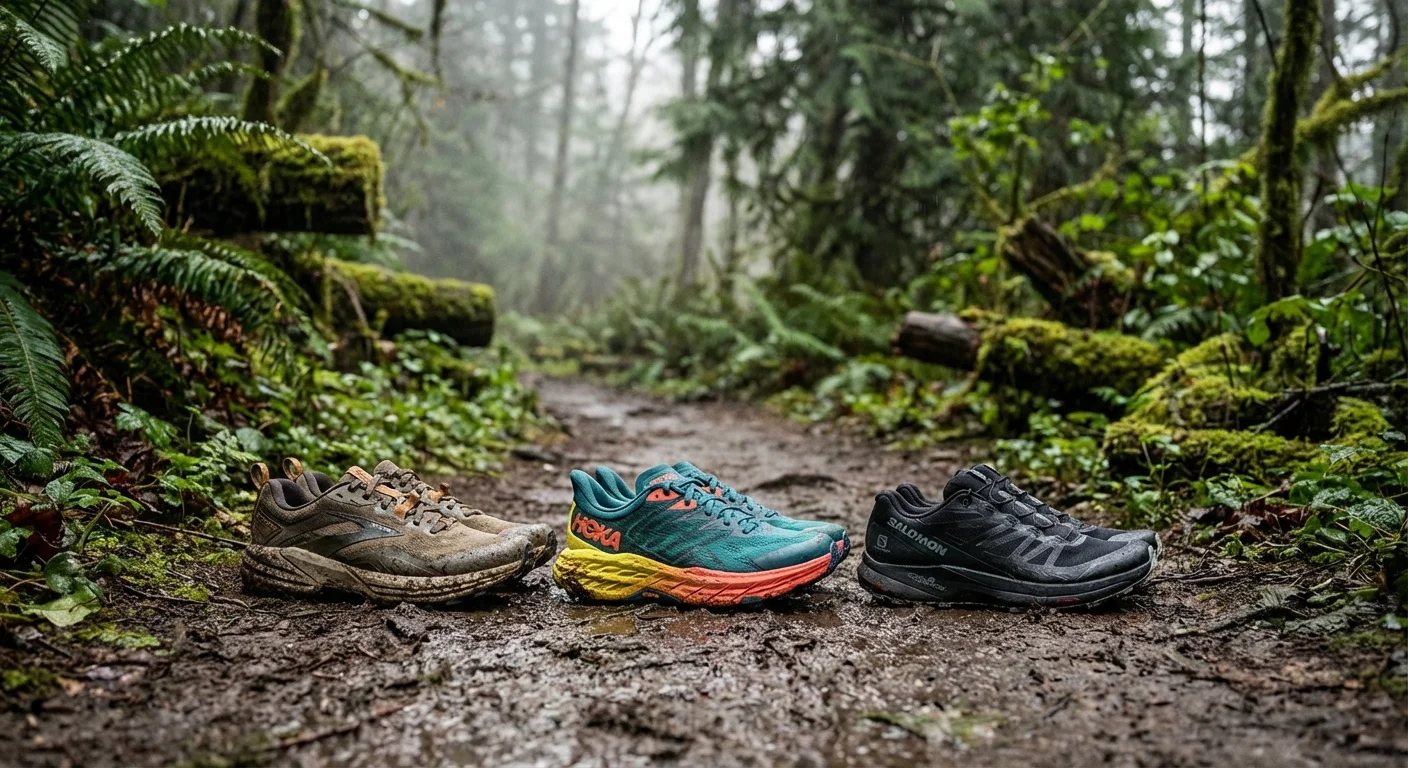
The Speedgoat 6’s Vibram Megagrip outsole edges out the competition. Its 5mm lugs are the deepest in our test. They grip mud, rock, and loose dirt. The Cascadia 19 is close behind with its TrailTack rubber. It’s better on wet rock than the Speedgoat. The Sense Ride 6 has the least aggressive tread. It’s best on packed or groomed trails.
Weight and Speed
The Salomon Sense Ride 6 is the lightest at 9.9 oz. That’s 0.5 oz less than the Cascadia and 0.9 oz less than the Speedgoat. On a 20-mile run, you’ll move your feet about 40,000 times. Those ounces add up. Speed-focused runners will like the Sense Ride.
Durability
All three shoes held up well over 80+ test miles. The Cascadia 19 showed the least outsole wear. The Speedgoat 6 had minor foam compression in the heel. The Sense Ride 6 showed slight upper wear near the toe. We expect 300-400 miles from each pair.
Price and Value Analysis
The price spread here is tight. Just $15 separates the cheapest from the most expensive. The Salomon Sense Ride 6 at $140 offers the best value per dollar. You get solid support, light weight, and good traction. It’s the smart choice for budget-minded trail runners. We cover the full lineup in our trail running shoes for mud feature.
The Brooks Cascadia 19 at $149.95 costs $10 more. But the GuideRails system alone justifies that. If you have moderate to severe flat feet, spend the extra $10. Your arches will thank you after mile 10.
The Hoka Speedgoat 6 at $155 is the premium pick. You’re paying for that massive 36.5mm of cushion. It’s worth it for ultra runners or anyone who runs trails over 15 miles at a time. For shorter runs, you won’t notice the cushion advantage as much.
All three shoes last about 300-400 miles. That works out to roughly $0.37-$0.52 per mile. That’s a fair deal for quality trail shoes for flat feet. For a side-by-side look, see our merrell trail running shoes comparison guide.
What Customers Are Saying
“I’ve had flat feet my whole life. The Cascadia 19 is the first trail shoe that doesn’t hurt after 10 miles. The GuideRails keep my ankles from rolling inward. I’m on my second pair now.”
“The Speedgoat 6 feels like running on pillows. My knees and arches feel way better after long runs. Only downside is it feels a bit wobbly on super narrow trails.”
“Picked up the Sense Ride 6 for weekend trail hikes. Great shoe for the price. It’s light and fast. I did add aftermarket insoles since my arches are really flat.”
Our Recommendation: Which Trail Shoe Is Best for Your Flat Feet?
Best Overall — Brooks Cascadia 19. This is our top pick for most flat-footed trail runners. The GuideRails system gives the most active arch support. The 8mm drop is ideal. The traction handles almost any terrain. At $149.95, it’s a great deal.
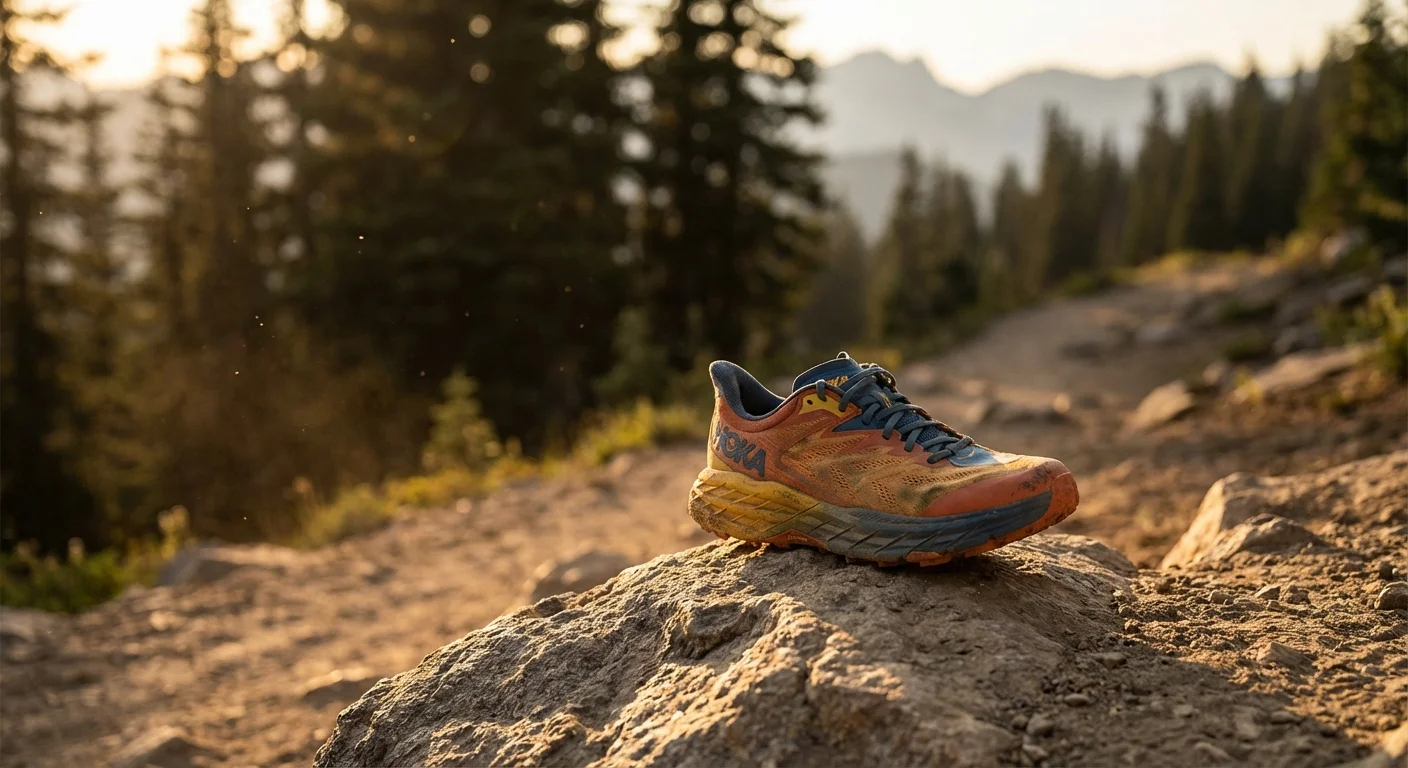
Best for Ultra Runners — Hoka Speedgoat 6. If you run long distances on trails, you need that 36.5mm of cushion. It protects your flat arches over many hours. The wide base keeps you stable. Just be careful on tight, technical sections.
Best Value — Salomon Sense Ride 6. At $140 and just 9.9 oz, this shoe punches above its weight. It’s great for moderate trails and shorter runs. Pair it with custom insoles if you need extra arch support.
No matter which shoe you choose, we suggest replacing the stock insole. A quality aftermarket insole with arch support can turn a good shoe into a great one for flat feet. Brands like Superfeet Green or Currex RunPro work well in all three options.
Frequently Asked Questions About Trail Shoes for Flat Feet
Do I need stability trail shoes if I have flat feet?
Not always. Flat feet often cause overpronation. That’s when your foot rolls inward too much. Stability shoes help correct this. But some flat-footed runners have neutral gaits. Visit a running store for a gait analysis first. If you overpronate, go with the Brooks Cascadia 19 for the best support.
What heel drop is best for flat feet on trails?
An 8mm to 10mm drop works well for most flat-footed runners. This drop angle takes pressure off your arch and Achilles tendon. Both the Brooks Cascadia 19 and Salomon Sense Ride 6 have an 8mm drop. The Hoka Speedgoat’s 5mm drop can work too. But ease into it if you’re used to higher drops.
Should I use custom insoles with trail shoes?
Yes, in most cases. Stock insoles are generic. They don’t match your flat arch shape. A custom or semi-custom insole adds targeted support. Superfeet Green insoles cost about $50. They fit all three shoes we tested. Your podiatrist can also make custom orthotics for $200-$400.
Can flat feet cause knee pain on trails?
Yes, they can. Flat arches change how force travels up your leg. This can stress your knees, hips, and lower back. The right trail shoes reduce this risk. Cushioned, supportive shoes like the ones in this guide absorb shock. They also keep your foot aligned properly.
How often should I replace trail shoes for flat feet?
Replace them every 300-400 miles. That’s about every 4-6 months for regular trail runners. After 300 miles, the midsole foam loses its support. Flat-footed runners may notice this sooner. Watch for signs like increased arch pain or worn-down tread.
