
Expert Reviewed
Updated Regularly
The debate around trail shoes vs hiking shoes matters more than ever in 2026. Both types handle rugged ground. But they serve different goals. Trail shoes favor speed and agility. Hiking shoes focus on support and durability. Picking the wrong one can lead to sore feet, blisters, or worse. This guide breaks down the real differences. We’ll compare top models side by side with honest ratings. You’ll learn which shoe fits your terrain, pace, and budget. Whether you’re a fast-paced trail runner or a weekend day hiker, we’ve got you covered.
Table of Contents
- Key Takeaways
- Quick Comparison: Trail Shoes vs Hiking Shoes in 2026
- Individual Product Breakdowns
- Head-to-Head: Trail Shoes vs Hiking Shoes on Key Criteria
- Price and Value Analysis
- What Real Users Say
- Our Recommendation: Trail Shoes vs Hiking Shoes
- Frequently Asked Questions About Trail Shoes vs Hiking Shoes
Key Takeaways
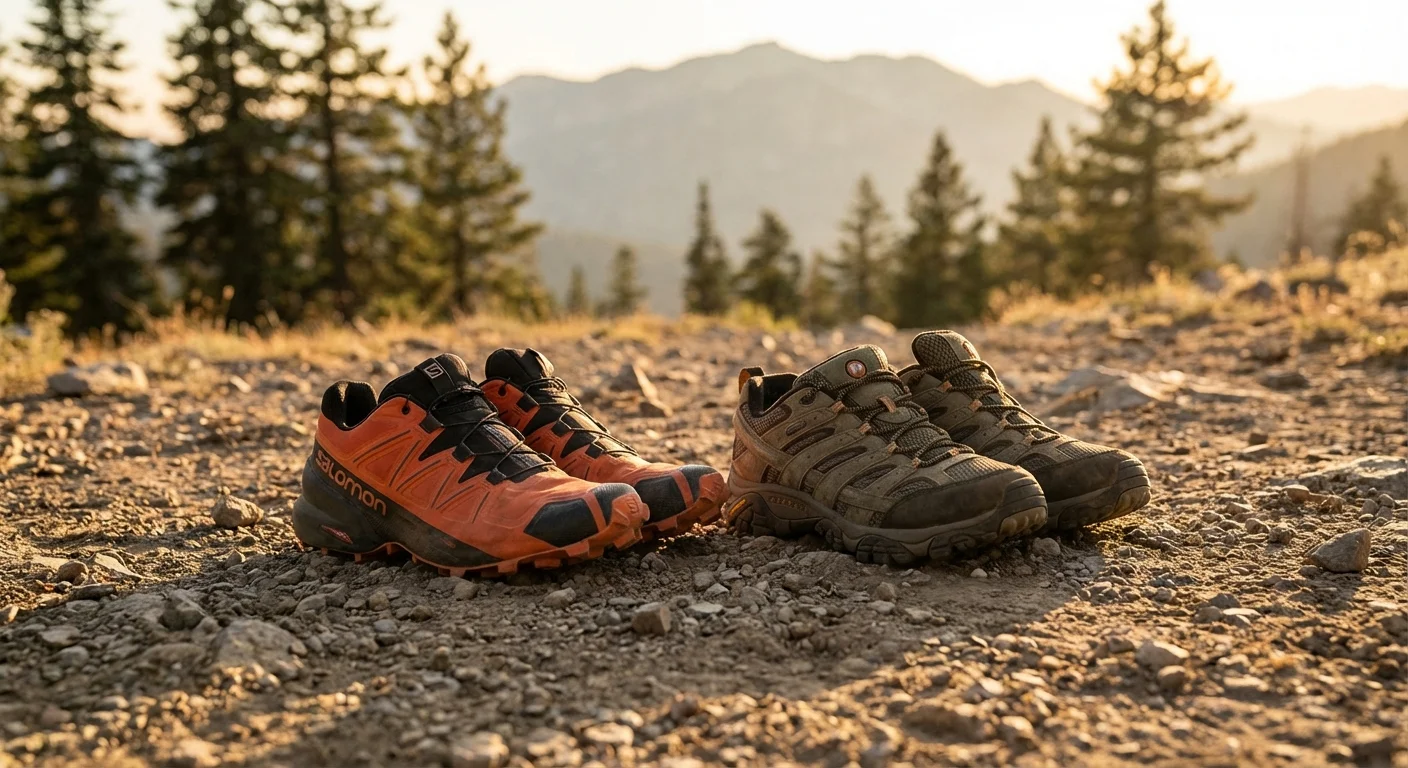
- Trail shoes like the Salomon Speedcross 6 weigh about 10.4 oz, while hiking shoes like the Merrell Moab 3 weigh around 15 oz — that’s a 30% weight difference.
- Hiking shoes offer 15–20mm more ankle coverage and stiffer midsoles for heavy loads up to 25+ lbs.
- Trail shoes cost $130–$160 on average, while solid hiking shoes range from $110–$150 in 2026.
- For fast day hikes under 8 miles with a light pack, trail shoes are the better pick.
- For rough, rocky terrain with a 20+ lb pack, hiking shoes give safer support and last longer.
Quick Comparison: Trail Shoes vs Hiking Shoes in 2026
| Feature | Salomon Speedcross 6 (Trail) | Merrell Moab 3 (Hiking) | Hoka Speedgoat 6 (Trail/Hybrid) |
|---|---|---|---|
| Price (2026 MSRP) | $145 | $120 | $155 |
| Weight (per shoe) | 10.4 oz | 15 oz | 10.8 oz |
| Lug Depth | 6mm | 5mm | 5mm |
| Drop (Heel-to-Toe) | 10mm | 12mm | 4mm |
| Cushion Level | Moderate | Firm | Maximum |
| Waterproof Option | Yes (GTX) | Yes (Standard) | Yes (GTX) |
| Best For | Fast trail runs, muddy terrain | Day hikes, rocky trails, heavy packs | Long runs, mixed terrain, ultralight hiking |
| Our Rating | 4.5/5 | 4.3/5 | 4.6/5 |
Individual Product Breakdowns
Salomon Speedcross 6
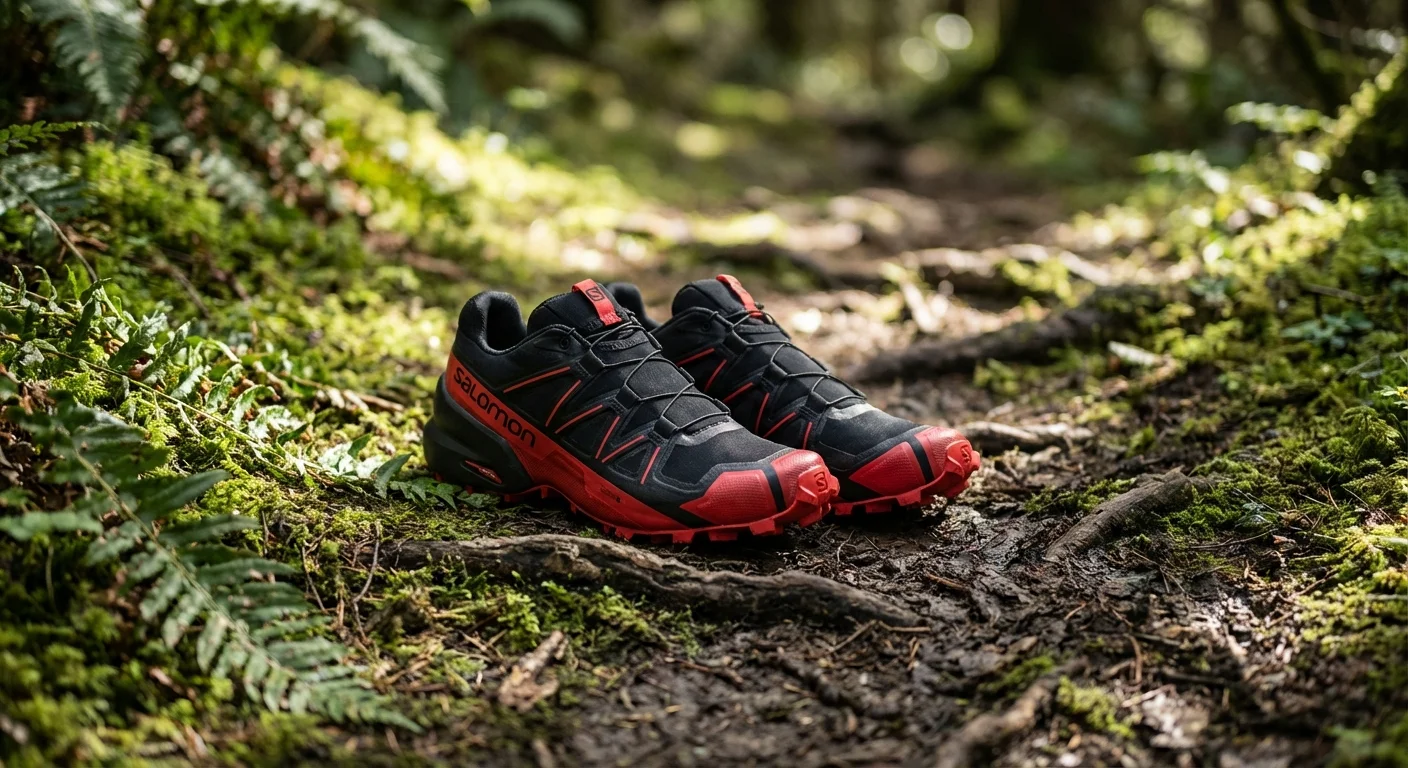
The Salomon Speedcross 6 is a trail running icon. It’s built for speed on soft, muddy, and loose ground. The aggressive 6mm chevron lugs bite into dirt like cleats. They shed mud fast, too. Salomon uses their EnergyCell+ foam in the midsole. It’s bouncy without being mushy. The Quicklace system lets you tighten the fit in seconds. No fumbling with knots on the trail.
This shoe weighs just 10.4 oz. That’s light enough for race day. The Sensifit cradle wraps your midfoot snugly. It feels locked in during sharp turns. The 10mm drop suits runners who like a heel-forward stride.
But it has limits. The sole is soft compared to hiking shoes. Sharp rocks can poke through on technical terrain. It also lacks the ankle support you’d want with a heavy pack. The narrow toe box won’t work for wide feet. Salomon runs small, so size up by half.
For fast-and-light trail days, it’s hard to beat. It’s a pure runner’s shoe that crosses over well for short hikes.
$145
- Best-in-class mud traction with deep chevron lugs
- Quicklace system is fast and secure
- Light at 10.4 oz — great for speed
- Responsive EnergyCell+ cushion
- Poor rock protection on sharp terrain
- Narrow toe box — not ideal for wide feet
- Low durability under heavy loads
- Runs half a size small
Merrell Moab 3
The Merrell Moab 3 is one of the best-selling hiking shoes ever. Millions of hikers trust it. The name “Moab” stands for “Mother of All Boots.” It lives up to the hype for day hikes.
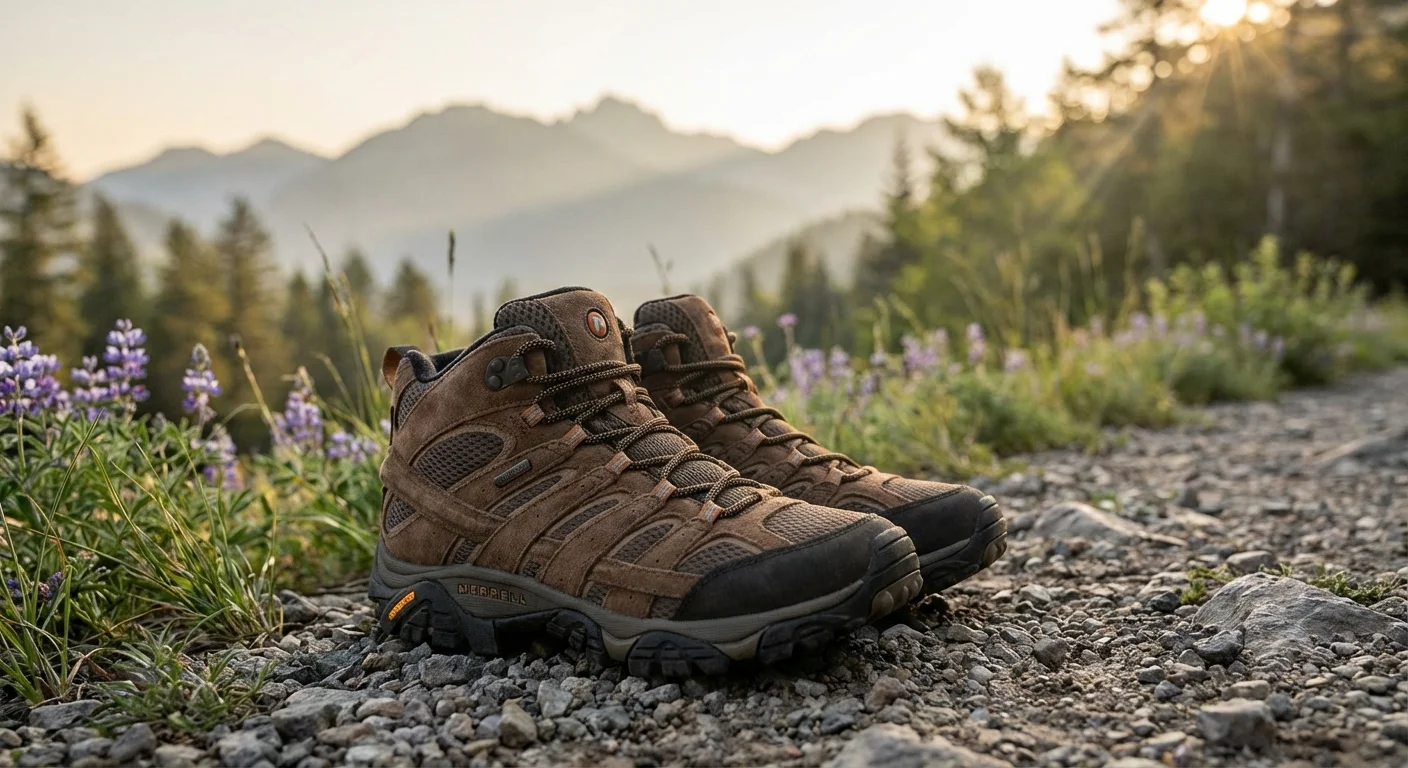
This shoe uses Vibram TC5+ rubber outsoles. They grip wet rock and dry dirt equally well. The 5mm lugs aren’t as deep as the Speedcross. But they’re wider and more stable. The Bellows tongue keeps debris out. The Kinetic Fit Base insole adds arch support that trail shoes rarely match.
At 15 oz, the Moab 3 is heavier than trail shoes. You’ll feel the extra weight on long runs. But that weight comes from a stiffer midsole and a rock plate. These features protect your feet on jagged terrain. The shoe handles loads up to 25 lbs comfortably.
The toe box is wider than the Salomon. Most feet fit well right out of the box. The waterproof version adds a membrane without much extra weight. At $120, it’s the most affordable pick in this roundup.
It’s not a running shoe. The stiff platform slows you down. But for steady day hikes on rocky trails, the Moab 3 is reliable and proven.
$120
- Vibram outsole grips wet and dry surfaces well
- Wide toe box fits most foot shapes
- Built-in rock plate for sharp terrain
- Affordable at $120
- Heavy at 15 oz — not for running
- Stiff ride lacks energy return
- Cushion breaks down after 400–500 miles
- Looks dated compared to newer designs
Hoka Speedgoat 6
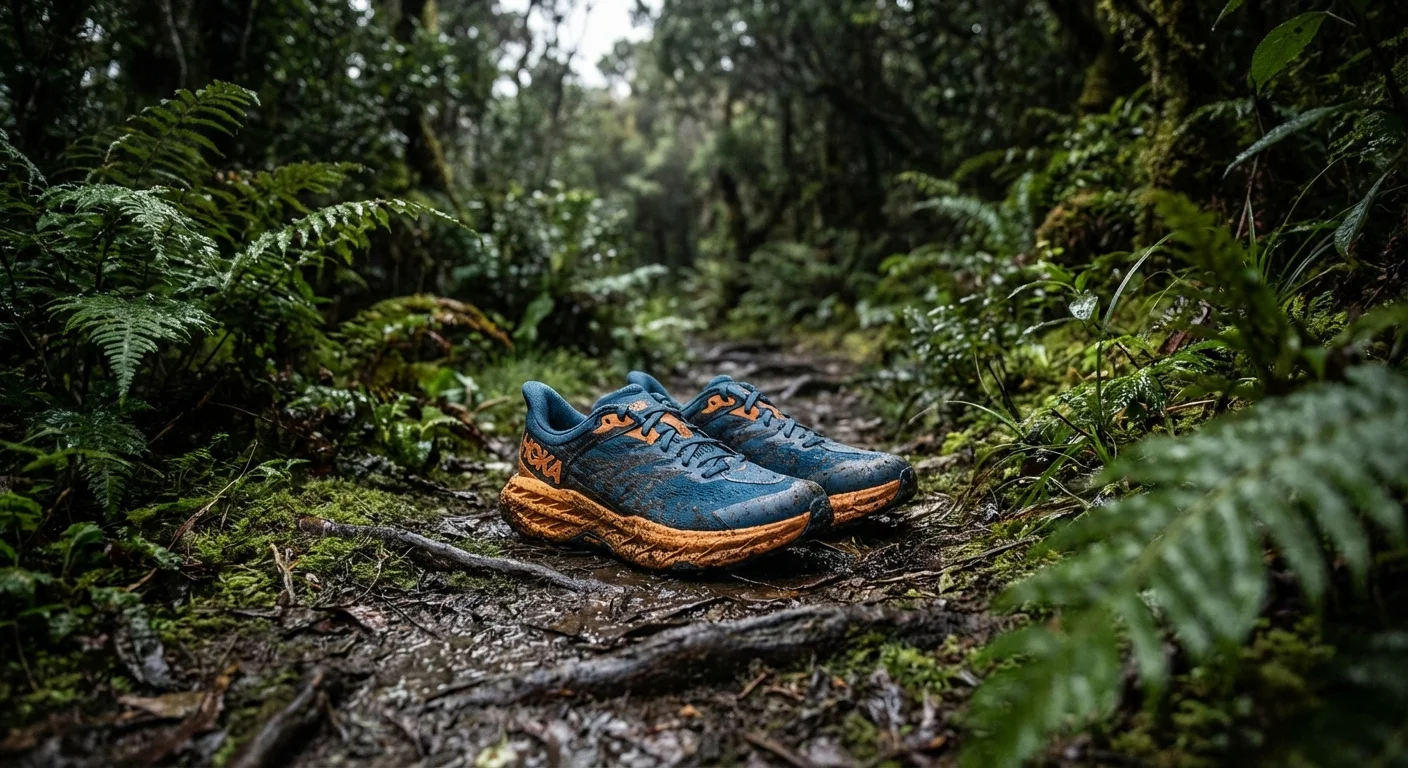
Can’t decide between trail shoes vs hiking shoes? The Hoka Speedgoat 6 blurs the line. It’s built for ultrarunning. But its thick cushion stack works great for long hikes, too.
Hoka uses their latest CMEVA foam. It’s 12% lighter than the Speedgoat 5’s midsole. You get 33mm of stack height under the heel. That’s a massive cushion buffer. Yet the shoe only weighs 10.8 oz. The Vibram Megagrip outsole uses 5mm lugs. They grip well on mixed terrain — rock, dirt, gravel, and roots.
The 4mm drop is low. It promotes a midfoot strike. Runners who like a natural feel will enjoy this. The wider toe box gives your toes room to splay on downhills. This reduces hot spots and blisters during long efforts.
The trade-off? The soft cushion isn’t as stable as the Moab 3. You might roll an ankle on very uneven ground. The shoe also doesn’t handle heavy packs as well. Keep your load under 15 lbs for best results.
At $155, it’s the priciest pick. But you get a shoe that runs fast and hikes comfortably. It’s the most versatile option for 2026.
$155
- 33mm cushion stack absorbs impact over long miles
- Only 10.8 oz — light for this much padding
- Vibram Megagrip outsole handles mixed terrain
- Wide toe box reduces blisters
- Soft platform feels unstable on rocky scrambles
- Not great with heavy packs over 15 lbs
- Higher price at $155
- Foam compresses faster than firmer shoes
Head-to-Head: Trail Shoes vs Hiking Shoes on Key Criteria
Traction and Grip
The Speedcross 6 wins on mud. Its 6mm lugs are 20% deeper than the Moab 3’s. They dig into soft ground better. But on wet rock, the Moab 3’s wider Vibram lugs provide a more stable platform. The Speedgoat 6 splits the difference. Its Megagrip rubber handles the widest range of surfaces.
Weight and Speed
Trail shoes are clearly lighter. The Speedcross 6 is 30% lighter than the Moab 3. That gap adds up over 10+ miles. You’ll move faster and tire less in trail shoes. The Speedgoat 6 comes close at 10.8 oz. It’s a strong pick if you want cushion without bulk. Hiking shoes like the Moab trade speed for stability.
Support and Protection
Hiking shoes win here by a wide margin. The Moab 3’s rock plate blocks sharp stones. Its stiffer midsole prevents foot fatigue under load. Trail shoes flex more. That’s great for agility. But it means less protection on sharp, technical ground. If you carry more than 15 lbs, a hiking shoe keeps your feet safer. Before you decide, it’s worth reading our what kind of shoes are best for trails? deep dive.
Cushion and Comfort
The Speedgoat 6 leads with 33mm of stack height. That’s 8mm more than the Speedcross 6. The Moab 3 sits in the middle. Its cushion is firmer. It doesn’t absorb as much impact. But it lasts longer before breaking down. For all-day comfort on flat to moderate terrain, the Speedgoat is king.
Durability
Hiking shoes outlast trail shoes. The Moab 3 typically handles 500–600 miles. The Speedcross 6 wears out around 300–400 miles. The Speedgoat 6 falls somewhere around 350–450 miles. Trail shoe foam compresses faster. Hiking shoe rubber outsoles wear more slowly. If you hike twice a week, expect to replace trail shoes every 6–8 months.
Price and Value Analysis
Budget Pick: Under $130
The Merrell Moab 3 at $120 is the clear value leader. You get Vibram rubber, a rock plate, and a trusted design. The cost per mile is low since it lasts up to 600 miles. That’s about $0.20 per mile.
Mid-Range: $130–$150
The Salomon Speedcross 6 at $145 is fair for what you get. Its Quicklace system and aggressive tread add real value. But its shorter lifespan (300–400 miles) raises the cost per mile to roughly $0.40.
Premium: $150+
The Hoka Speedgoat 6 at $155 costs the most upfront. However, its dual-use design saves money. You don’t need separate trail and hiking shoes. If it replaces two pairs, you’re ahead. The cost per mile sits near $0.37.
Overall, when weighing trail shoes vs hiking shoes on pure value, the Moab 3 wins for hikers. The Speedgoat 6 wins for runners who also hike.
What Real Users Say
“I switched from hiking boots to the Speedgoat 6 last spring. My knees feel so much better on long days. I’ve done 300 miles in them and they still feel great. Best trail shoes I’ve owned.”
“The Moab 3 is my go-to day hiker. Nothing fancy, but it works every time. I’ve taken it through rain, mud, and rocky scrambles. At this price, you can’t beat it.” For a side-by-side look, see our is merrell or hoka better? comparison guide.
“Love the Speedcross for muddy runs. Grip is insane. But I wore through the soles in four months. If you run 30+ miles a week, be ready to replace them fast.”
Our Recommendation: Trail Shoes vs Hiking Shoes
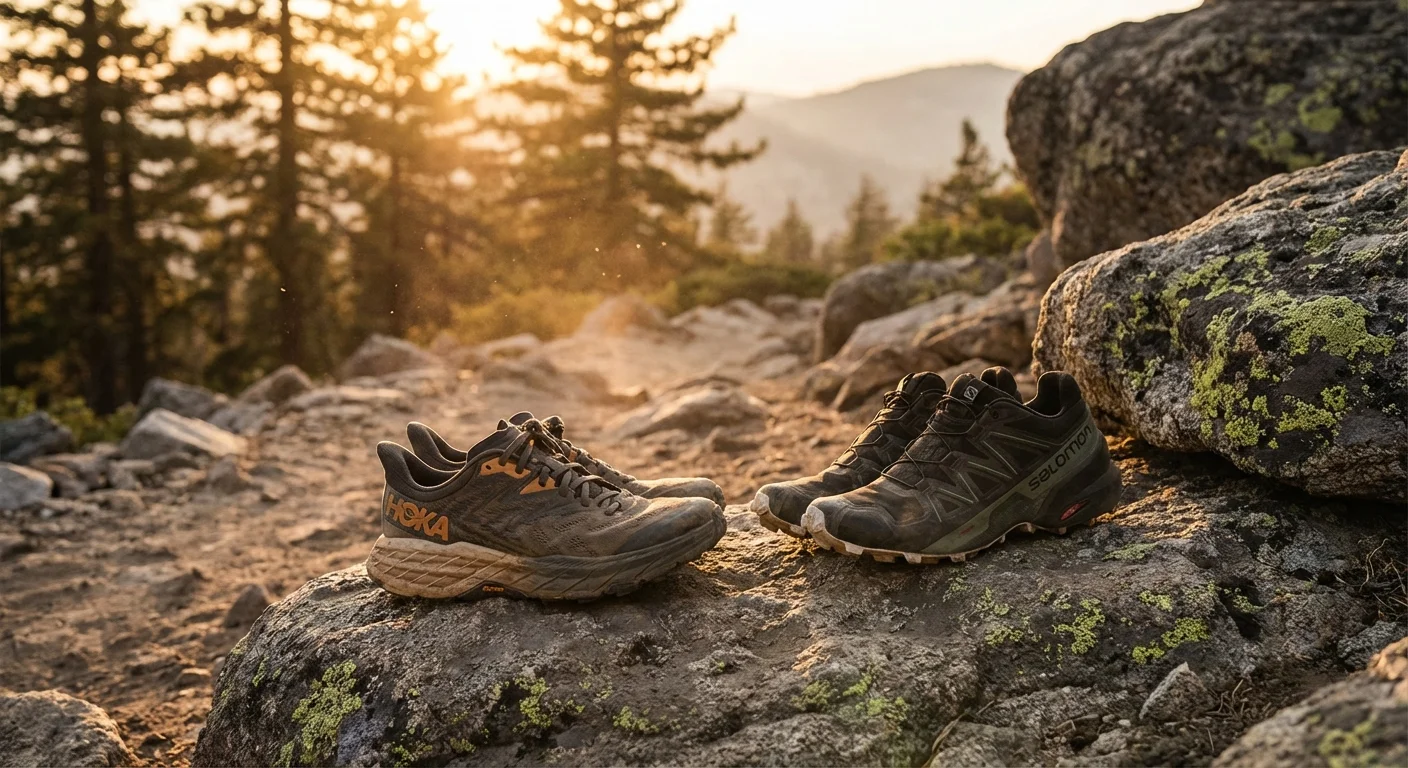
Choose the Salomon Speedcross 6 if you’re a trail runner first. It’s the fastest shoe here. It grips mud like nothing else. Stick with it for runs under 15 miles on soft terrain. Keep your pack light or nonexistent.
Choose the Merrell Moab 3 if you’re a day hiker who wants proven reliability. It handles rocky trails and moderate loads with ease. It’s also the cheapest option. First-time hikers should start here.
Choose the Hoka Speedgoat 6 if you want the best of both worlds. It runs fast and hikes comfortably. It’s our top pick for 2026 if you can only buy one shoe. The cushion is unmatched at this weight.
The trail shoes vs hiking shoes choice really comes down to your pace and pack. Go light and fast? Trail shoes. Go steady and loaded? Hiking shoes. Can’t choose? The Speedgoat covers both.
Frequently Asked Questions About Trail Shoes vs Hiking Shoes
Can I use trail running shoes for hiking?
Yes, many hikers do. Trail shoes work great for fast, light day hikes. They’re best on smooth to moderate trails. Avoid them for heavy packs over 15 lbs. They lack the stiffness and rock protection of true hiking shoes. For short hikes under 10 miles, they’re a solid choice.
Are hiking shoes better than trail shoes for rocky terrain?
Usually, yes. Hiking shoes like the Merrell Moab 3 have rock plates. These block sharp stones from bruising your feet. Trail shoes flex more. That means rocks poke through easier. If your trail has lots of jagged rocks, hiking shoes are safer.
How long do trail shoes and hiking shoes last?
Trail shoes last about 300–450 miles on average. Hiking shoes last 500–600 miles. The difference comes from sole thickness and foam density. Hiking shoes use firmer materials. Trail shoes use softer foam that compresses faster. Replace your shoes when traction fades or cushion feels flat.
Do I need waterproof trail or hiking shoes?
It depends on your climate. Waterproof versions keep rain and puddles out. But they trap sweat inside. In hot weather, non-waterproof shoes dry faster and breathe better. For wet climates or stream crossings, waterproof is worth it. All three shoes in this guide offer waterproof versions.
What’s the biggest difference between trail shoes and hiking shoes?
Weight and stiffness. Trail shoes weigh 9–11 oz and flex freely. Hiking shoes weigh 13–16 oz and have rigid midsoles. This makes trail shoes faster but less protective. Hiking shoes are slower but safer on rough ground. The trail shoes vs hiking shoes debate always centers on this trade-off.
