
Expert Reviewed
Updated Regularly
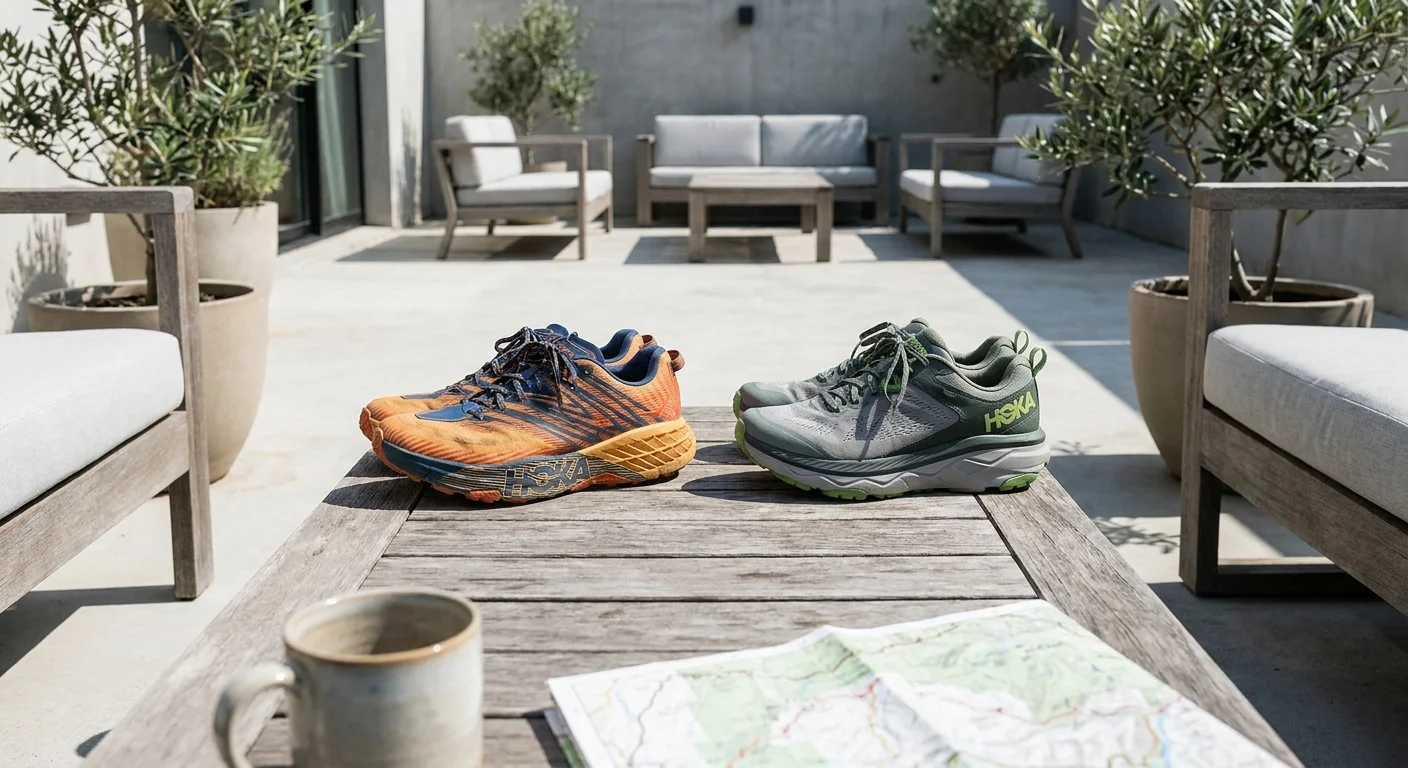
If you’re asking which is better Hoka Challenger or Speedgoat, you’re not alone. These two trail shoes from Hoka are among the most popular on the market in 2026. Both share Hoka’s signature cushioned ride. But they’re built for very different terrain. The Challenger ATR 8 handles mixed surfaces like roads and light trails. The Speedgoat 6 tackles rugged, technical mountain paths. Picking the right one depends on where you run and how you run. This guide breaks down every key difference. We’ll compare cushioning, grip, weight, price, and comfort. By the end, you’ll know exactly which shoe fits your needs.
Table of Contents
- Key Takeaways
- Hoka Challenger ATR 8: The Versatile All-Rounder
- Hoka Speedgoat 6: The Mountain Beast
- Which Is Better Hoka Challenger or Speedgoat? Head-to-Head Breakdown
- Price and Value Analysis
- What Real Runners Say: Customer Reviews
- Our Recommendation: Which Is Better Hoka Challenger or Speedgoat for You?
- Frequently Asked Questions
Key Takeaways
- The Hoka Speedgoat 6 offers deeper 5mm lugs for aggressive trail grip, while the Challenger ATR 8 has shallower 4mm lugs for mixed terrain.
- The Challenger ATR 8 is lighter at 9.1 oz (men’s size 9) compared to the Speedgoat 6 at 10.2 oz.
- Both shoes retail at $155 in 2026, making price a non-factor in this decision.
- Choose the Speedgoat 6 for rocky, muddy, and technical trails — choose the Challenger ATR 8 for road-to-trail versatility.
- The Challenger ATR 8 rates higher for beginners, while the Speedgoat 6 is the pick for experienced trail runners.
| Feature | Hoka Challenger ATR 8 | Hoka Speedgoat 6 |
|---|---|---|
| Price | $155 | $155 |
| Weight (Men’s Size 9) | 9.1 oz | 10.2 oz |
| Stack Height | 33mm heel / 28mm forefoot | 36mm heel / 32mm forefoot |
| Drop | 5mm | 4mm |
| Lug Depth | 4mm | 5mm |
| Outsole | Durabrasion Rubber | Vibram Megagrip |
| Best For | Road-to-trail, light trails | Technical trails, mountains |
| Our Rating | 4.3/5 | 4.6/5 |
Hoka Challenger ATR 8: The Versatile All-Rounder
Hoka Challenger ATR 8
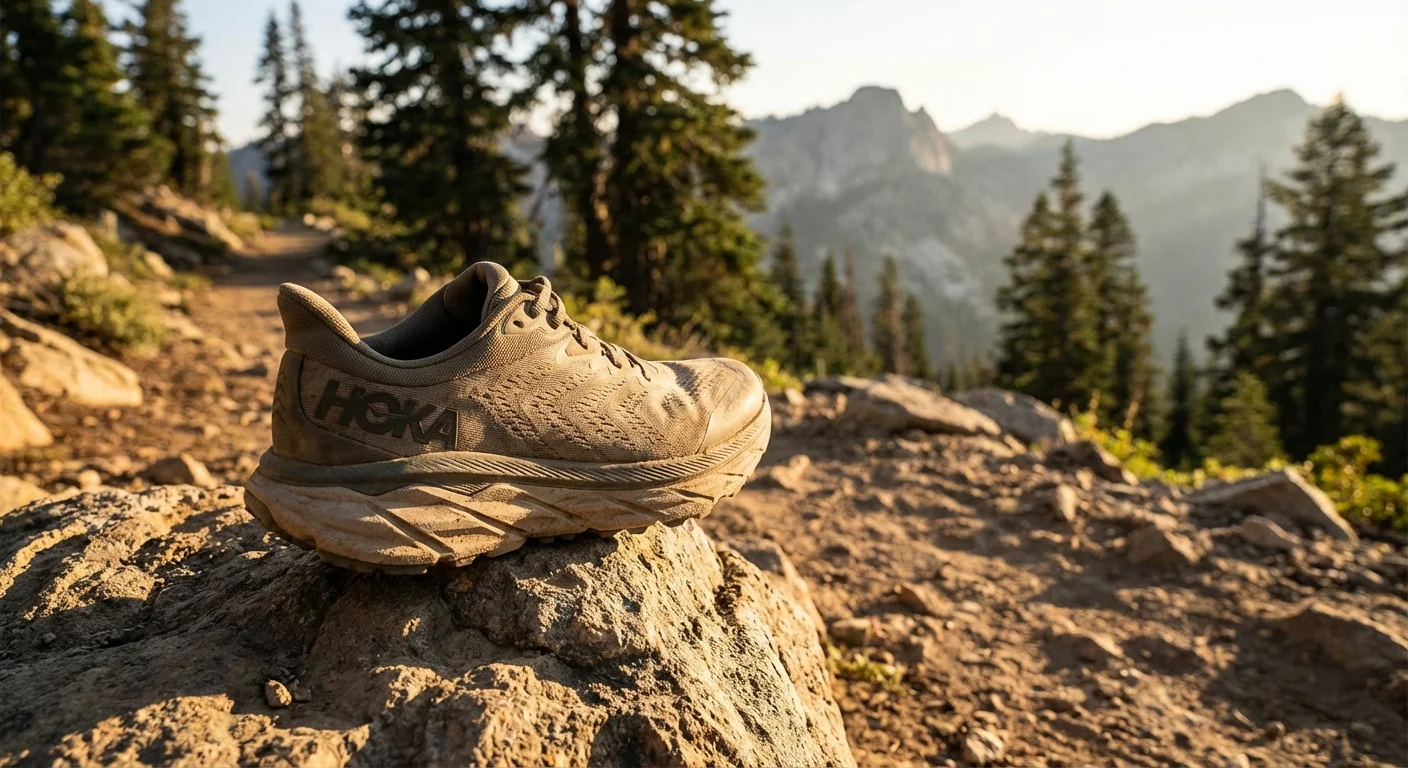
The Challenger ATR 8 is Hoka’s go-to hybrid trail shoe. It shines on mixed terrain. Think gravel paths, dirt roads, and light singletrack. The “ATR” stands for “All Terrain.” That name tells you everything about its purpose.
This shoe weighs just 9.1 oz in a men’s size 9. That’s over an ounce lighter than the Speedgoat 6. You’ll feel that difference on long runs. The midsole uses compressed EVA foam. It gives you a smooth, responsive ride on harder surfaces. The stack height sits at 33mm in the heel and 28mm in the forefoot. That 5mm drop feels natural and balanced.
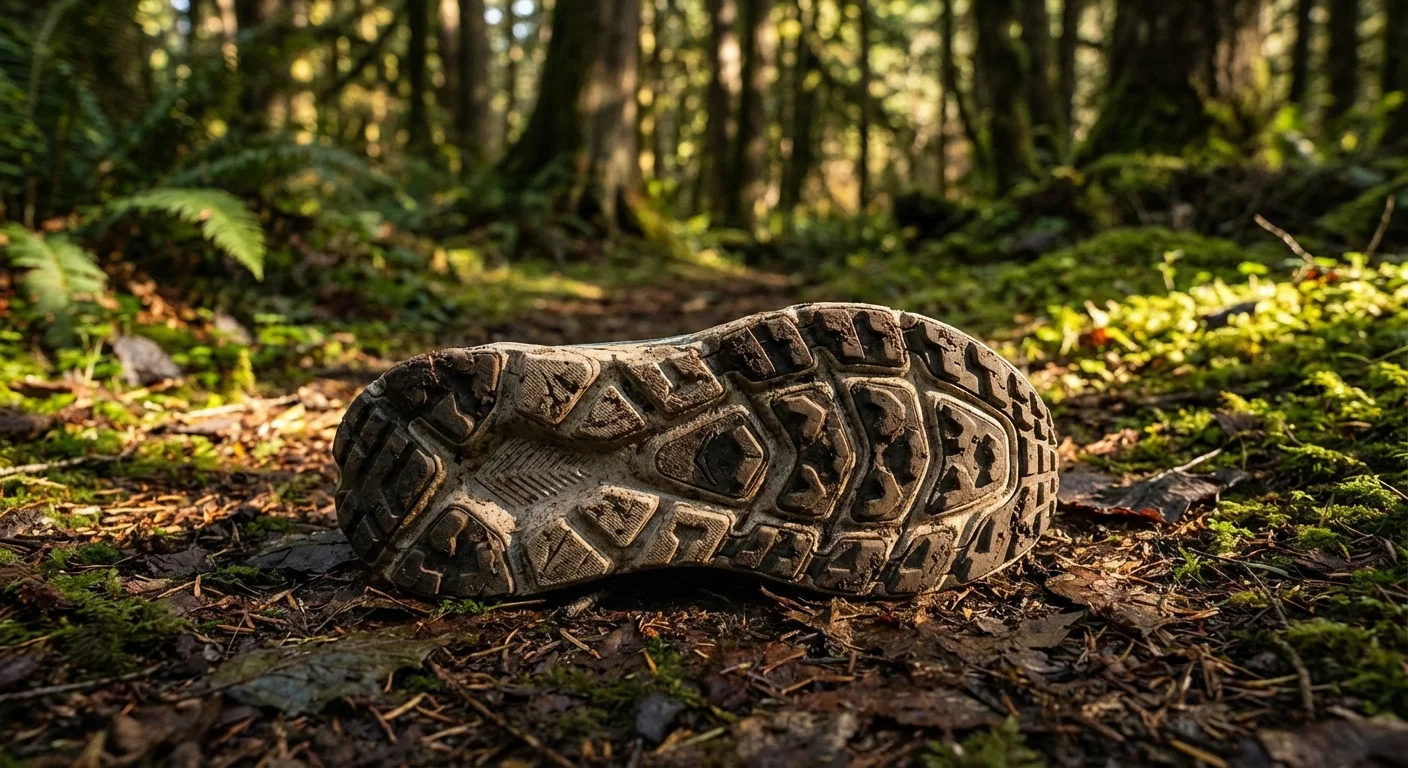
The outsole uses Hoka’s Durabrasion Rubber. It works well on packed dirt and pavement. But it doesn’t grip as well on wet rocks or deep mud. The lug depth is 4mm. That’s enough for groomed trails but not for steep, loose terrain.
The upper is a breathable mesh. It dries fast and keeps your feet cool. The toe box has a comfortable width. It’s not too narrow and not too wide. Most runners find the fit true to size.
The Challenger ATR 8 is perfect if you run on roads and trails in the same session. It handles transitions smoothly. You won’t feel clunky on pavement like you would with aggressive trail shoes. It’s a great first trail shoe for road runners who want to explore off-road.
$155.00
- Light at only 9.1 oz
- Smooth ride on roads and packed trails
- Breathable mesh upper dries quickly
- Versatile road-to-trail design
- Comfortable right out of the box
- Limited grip on wet, rocky terrain
- Not enough protection for sharp rocks
- Outsole wears faster on pure pavement
- Less cushion than the Speedgoat 6
Hoka Speedgoat 6: The Mountain Beast
Hoka Speedgoat 6
The Speedgoat 6 is Hoka’s flagship trail shoe. It’s named after ultrarunner Karl “Speedgoat” Meltzer. This shoe was built for tough, technical trails. It thrives on rocky mountain paths, muddy singletracks, and steep descents.
It weighs 10.2 oz in a men’s size 9. That’s heavier than the Challenger. But you get much more underfoot. The stack height is 36mm at the heel and 32mm at the forefoot. That extra foam absorbs impact on rough terrain. The 4mm drop keeps you close to the ground.
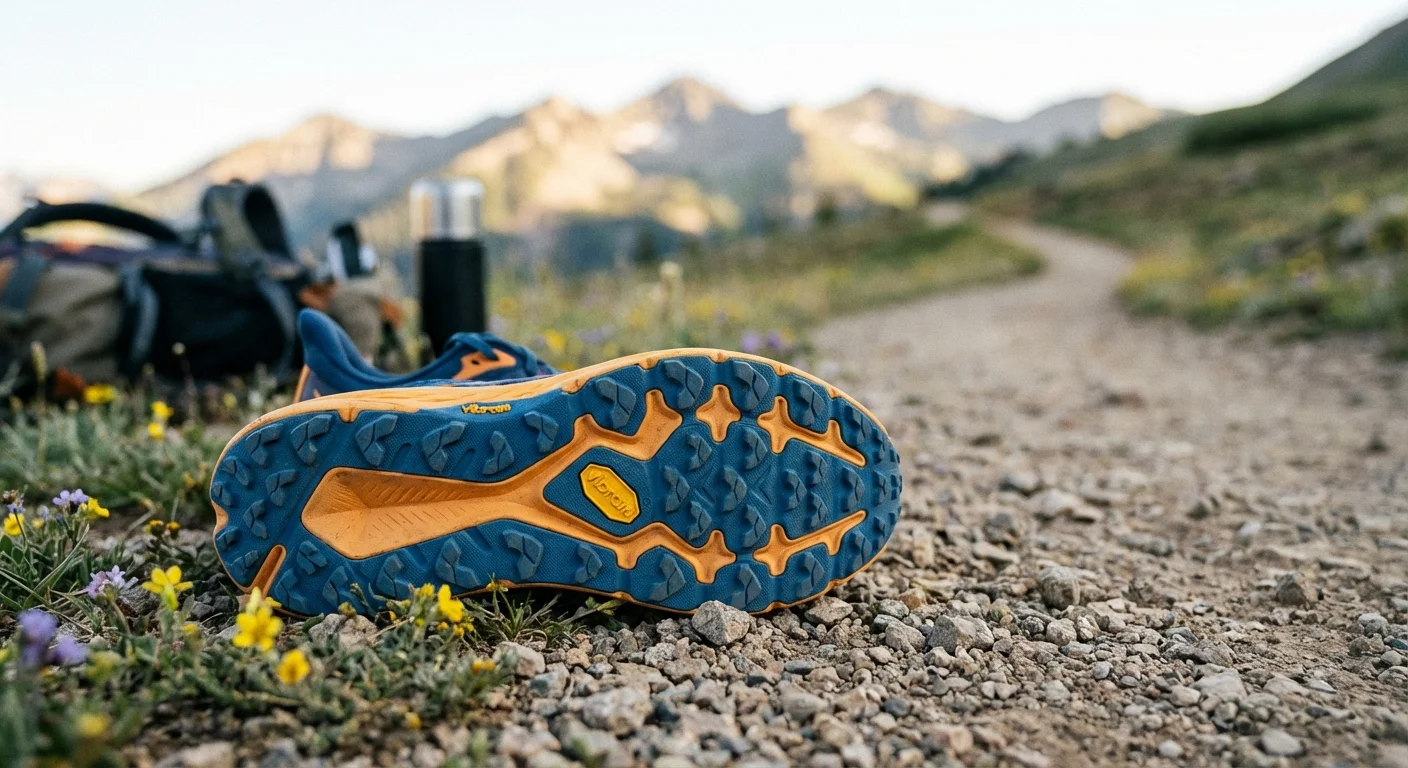
The real star is the Vibram Megagrip outsole. This is a big upgrade over the Challenger’s rubber. Vibram Megagrip is an industry standard for trail grip. It bites into wet rocks, loose gravel, and muddy slopes. The 5mm lugs are deep and multidirectional. They give you confidence on steep climbs and descents.
The midsole uses CMEVA foam. It’s soft yet supportive. You’ll feel protected on sharp rocks and roots. The shoe also has a gusseted tongue. It keeps dirt and debris out of your shoe.
The upper is reinforced in high-wear areas. It’s tougher than the Challenger’s mesh. This adds durability but reduces breathability slightly. The fit is snug in the midfoot. Many runners go up a half size for extra toe room on downhills.
The Speedgoat 6 is ideal for mountain runners. It handles ultramarathons on technical terrain. It’s the go-to shoe for races like UTMB and Western States qualifiers. If your trails are rough, this is your shoe.
$155.00
- Vibram Megagrip outsole for top-tier traction
- Extra cushioning at 36mm stack height
- Excellent rock protection
- Deep 5mm lugs grip in all conditions
- Proven on ultra-distance races
- Heavier at 10.2 oz
- Feels clunky on pavement
- Less breathable upper
- Snug fit may need half-size up
Which Is Better Hoka Challenger or Speedgoat? Head-to-Head Breakdown
Let’s compare these shoes on five key factors. This will help you decide which one fits your running style.
Traction and Grip
The Speedgoat 6 wins this category easily. Its Vibram Megagrip outsole is 30% more effective on wet surfaces. The 5mm lugs dig into loose terrain. The Challenger’s Durabrasion Rubber works fine on dry, packed trails. But it slips on wet rocks and mud. If you run in rain or on technical terrain, the Speedgoat is the clear choice.
Cushioning and Protection
The Speedgoat 6 has 3mm more stack height in both heel and forefoot. You feel that extra cushion on rocky trails. It absorbs sharp impacts better. The Challenger’s midsole is thinner but more responsive. It feels faster on flat, smooth surfaces. For rocky ultras, the Speedgoat protects your feet better.
Weight and Speed
The Challenger ATR 8 is 1.1 oz lighter per shoe. That’s 2.2 oz across both feet. Over a 50-mile ultra, that weight adds up. Lighter shoes reduce fatigue. The Challenger feels nimbler on flat trails. It’s the better choice for speed work on non-technical paths.
Versatility
The Challenger ATR 8 is far more versatile. You can run roads, bike paths, and trails in one shoe. The Speedgoat feels awkward on pavement. Its deep lugs wear down fast on hard surfaces. If you only own one pair of running shoes, the Challenger covers more ground.
Durability
The Speedgoat 6 lasts longer on trails. Its Vibram rubber is harder-wearing than the Challenger’s outsole. Expect 400-500 miles from the Speedgoat on trails. The Challenger lasts about 350-450 miles on mixed surfaces. The Speedgoat’s reinforced upper also holds up better against rocks and brush.
When asking which is better Hoka Challenger or Speedgoat, the answer depends on your terrain. The Speedgoat wins on pure trails. The Challenger wins on mixed surfaces.

Price and Value Analysis
Both shoes cost $155 in 2026. That makes this an easy comparison. Price isn’t a factor. You’re choosing based on features alone.
The Challenger ATR 8 offers better value if you need one shoe for everything. It handles roads and light trails. You won’t need a separate road shoe. That saves you money overall. We tested several alternatives in our asics gel venture roundup.
The Speedgoat 6 offers better value for dedicated trail runners. Its Vibram outsole alone justifies the price. That outsole technology costs extra in other brands. You’re getting premium grip at a mid-range price point. For hands-on impressions, read our is merrell or hoka better? breakdown.
You can often find last year’s models on sale. The Challenger ATR 7 and Speedgoat 5 drop to $110-$130 at discount retailers. These older versions are still excellent shoes. They share 90% of the same features. This is a smart way to save if you’re budget-conscious.
For runners who ask which is better Hoka Challenger or Speedgoat for the money, both deliver strong value. Your terrain should decide, not your wallet.
What Real Runners Say: Customer Reviews
“I’ve run 300 miles in my Speedgoat 6 and the Vibram outsole still looks fresh. The grip on wet granite is unreal. I wore them at a 50K in the Cascades and never slipped once. They’re heavier than my old Challengers, but the traction is worth it.”
“The Challenger ATR 8 is my daily trainer. I run 3 miles on roads to the trailhead, then 5 miles on packed dirt. It handles both perfectly. Light and comfy from day one. I wouldn’t take it on rocky mountain trails, but for my use it’s ideal.” Our new balance hierro v9 review covers the specs and real-world performance in detail.
“Bought the Speedgoat 6 in my usual size and it was too tight on downhills. I exchanged for a half size up and it’s perfect now. The cushion is amazing for rocky trails. Just be aware of the fit issue.”
Our Recommendation: Which Is Better Hoka Challenger or Speedgoat for You?
Here’s our final take on which is better Hoka Challenger or Speedgoat in 2026.
Buy the Hoka Speedgoat 6 if: You run on technical trails with rocks, roots, mud, or steep grades. You need maximum grip and cushion. You train for mountain ultras or trail races. You don’t mind a slightly heavier shoe. The Speedgoat 6 earns our “Best Overall” badge at 4.6/5. Not sure which to pick? Our asics megablast guide walks through the trade-offs.
Buy the Hoka Challenger ATR 8 if: You run on roads and trails in the same workout. You want a lighter, faster-feeling shoe. Your trails are groomed and not very technical. You’re new to trail running and want a safe crossover shoe. It earns a solid 4.3/5.
Both are excellent shoes from Hoka. You can’t go wrong with either. Just match the shoe to your terrain. That’s the key to a great trail running experience in 2026.
Frequently Asked Questions
Can I use the Hoka Speedgoat 6 on roads?
You can, but it’s not ideal. The deep 5mm lugs feel awkward on pavement. They also wear down fast on hard surfaces. Use the Speedgoat on trails only. For road running, the Challenger ATR 8 is a much better option.
Is the Hoka Challenger ATR 8 good for beginners?
Yes. It’s one of the best beginner trail shoes in 2026. The light weight and smooth ride make it easy to transition from road running. It doesn’t feel extreme or aggressive. It’s a gentle intro to trail running.
Which is better Hoka Challenger or Speedgoat for ultra marathons?
It depends on the course. For technical mountain ultras, choose the Speedgoat 6. Its cushion and grip handle 50+ miles of rough terrain. For flat or groomed trail ultras, the Challenger ATR 8 works well. Its lighter weight reduces fatigue over long distances.
Do these Hoka shoes run true to size?
The Challenger ATR 8 runs true to size for most runners. The Speedgoat 6 fits snugger, especially in the toe box. Many runners go up a half size in the Speedgoat. This helps on steep downhills when your feet slide forward.
How long do the Hoka Challenger and Speedgoat last?
The Challenger ATR 8 lasts 350-450 miles on mixed surfaces. The Speedgoat 6 lasts 400-500 miles on trails. The Speedgoat’s Vibram rubber outsole is more durable. Both shoes hold up well compared to other trail shoes at this price.
Are there newer versions of these shoes coming in 2026?
Hoka updates both lines regularly. The Challenger ATR 8 and Speedgoat 6 are the current models as of early 2026. Check Hoka’s website for the latest releases. Older versions often go on sale when new ones launch.
